6 Types of Solar Panels Explained for Urban Homeowners
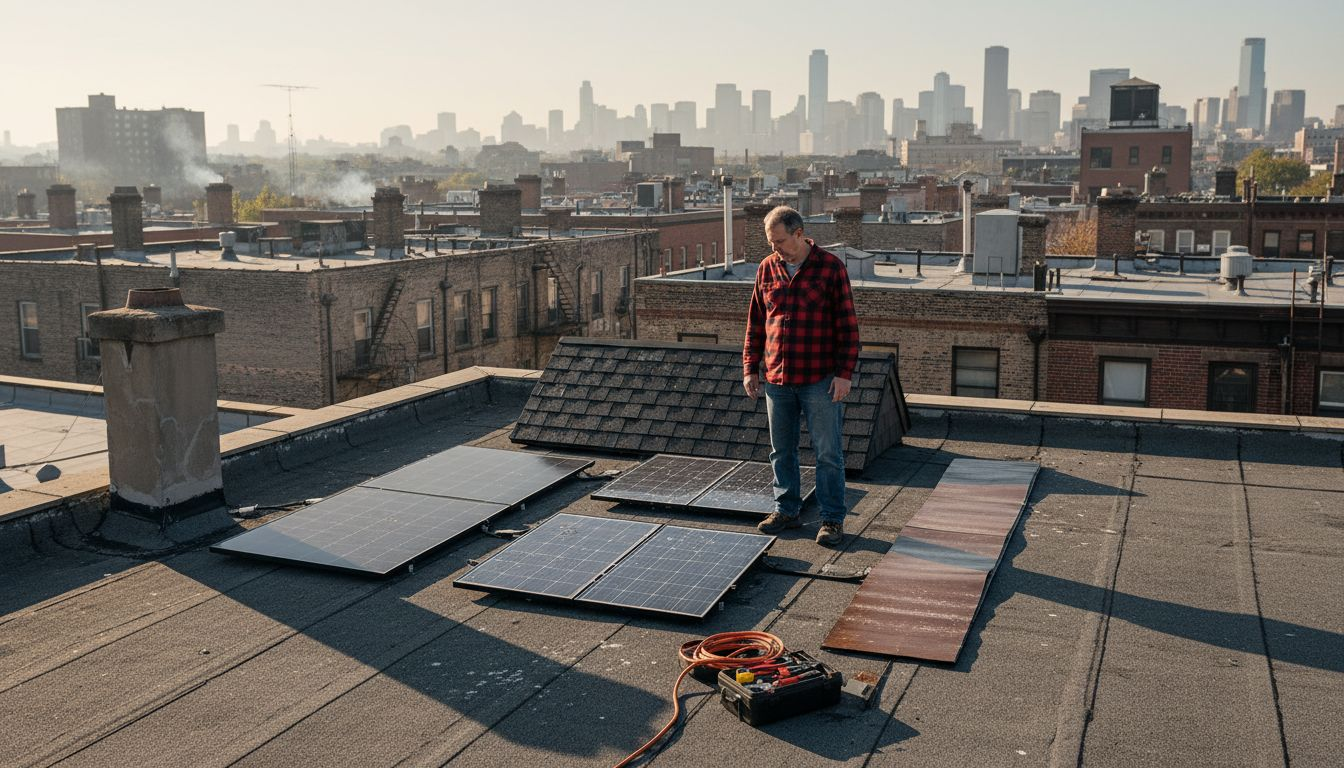
Choosing the right solar panels for your urban home can be overwhelming. With limited roof space, budget considerations, and neighborhood aesthetics in play, the stakes feel high every step of the way. Picking the wrong type could mean lost savings or a system that doesn’t fit your home’s needs.
This guide reveals the unique strengths and drawbacks of every major solar panel option for city homeowners like you. You’ll unlock actionable details, from real-world efficiency ratings to the best panel designs for tricky roofs and tight budgets.
Get ready to discover which solar technology will help you maximize energy production, save money, and enhance your home’s appearance—all within the practical constraints of urban living.
Table of Contents
- 1. Monocrystalline Solar Panels: High Efficiency and Sleek Design
- 2. Polycrystalline Solar Panels: Affordable Power for Homes
- 3. Thin-Film Solar Panels: Lightweight and Flexible Solutions
- 4. Bifacial Solar Panels: Double the Energy Production
- 5. PERC Solar Panels: Enhanced Performance in Low Light
- 6. Building-Integrated PV: Solar Panels Within Your Roof
Quick Summary
| Takeaway | Explanation |
|---|---|
| 1. Monocrystalline panels maximize energy per square foot | With efficiency ratings of 18-22%, these panels are ideal for urban homes with limited roof space, generating more power with fewer units. |
| 2. Polycrystalline panels are budget-friendly | Offering solid efficiency (15-19%), these panels are cheaper upfront, making them suitable for homeowners with ample roof space. |
| 3. Thin-film panels excel in unique installations | Lightweight and flexible, thin-film panels fit curved or irregular surfaces, making them ideal for varied architectural designs. |
| 4. Bifacial panels boost energy capture | These panels utilize both sides for energy generation, providing an 10-20% increase in output, maximizing existing roof space efficiency. |
| 5. PERC technology improves low-light efficiency | Enhancing performance in shaded conditions, PERC panels maintain higher output, which is valuable in urban settings with limited sun exposure. |
1. Monocrystalline Solar Panels: High Efficiency and Sleek Design
Monocrystalline solar panels represent the premium choice for urban homeowners seeking maximum energy production in limited space. These panels feature a distinctive single-crystal silicon structure that delivers superior performance compared to other panel types.
The construction begins with ultra-pure silicon formed into a single crystal. This uniform structure allows electrons to move more freely, capturing more sunlight and converting it directly into usable electricity. Urban homes benefit tremendously because you can generate more power with fewer panels on your roof.
Why does this matter for your home? Space constraints are real in cities. Monocrystalline panels typically achieve efficiency ratings between 18 and 22 percent, meaning more of the sun’s energy converts to power for your household. That’s significantly higher than alternatives, allowing you to maximize savings even on smaller roof areas.
Monocrystalline silicon wafers deliver superior electronic properties, making them the ideal solution for homeowners prioritizing both performance and aesthetics.
Beyond raw efficiency, these panels offer undeniable visual appeal. The sleek black appearance looks modern and cohesive on residential rooflines. Urban neighborhoods often have homeowner associations or aesthetic preferences, and monocrystalline panels complement contemporary architecture beautifully.
Key advantages for urban homeowners include:
- Space efficiency: Generate more power per square foot of roof space
- Elegant appearance: Uniform black design enhances home curb appeal
- Long-term reliability: Superior minority carrier lifetimes mean extended panel lifespan
- Reduced shading impact: Higher efficiency helps offset partial shading from neighboring buildings
- Better temperature performance: These panels maintain efficiency even on hot days
Monocrystalline panels do come at a higher upfront cost compared to polycrystalline alternatives. However, the increased electricity production and longevity typically offset this investment within 5 to 7 years through reduced utility bills.
Your home’s specific situation matters too. If you have southern or western roof exposure and limited space, monocrystalline panels deliver maximum returns. Understanding solar panel efficiency ratings helps you make informed decisions about which panel type matches your goals.
The manufacturing process has improved significantly, with modern production techniques ensuring consistent quality and performance. Urban installations benefit from this reliability because you’re investing in panels designed to work harder for decades.
Pro tip: Request a free rooftop assessment to determine your exact space and sun exposure, then ask for efficiency comparisons across panel types to see real dollar savings projections for your specific situation.
2. Polycrystalline Solar Panels: Affordable Power for Homes
Polycrystalline solar panels offer budget-friendly solar energy without sacrificing decent performance. These panels represent the smart choice for homeowners who prioritize affordability and have sufficient roof space to work with.
Manufacturers create polycrystalline panels by melting multiple silicon fragments together rather than using a single crystal. This production method costs significantly less than monocrystalline manufacturing, which translates directly to savings for you at installation time.
The distinctive bluish, speckled appearance reflects the panel’s multi-crystal composition. While they look different from sleek monocrystalline panels, many urban homeowners find the aesthetic acceptable, especially when factoring in the cost difference.
How efficient are polycrystalline panels? They typically deliver 15 to 19 percent efficiency ratings, capturing a solid portion of available sunlight. Though slightly lower than monocrystalline options, this efficiency still powers real household needs effectively.
Polycrystalline panels offer an ideal balance for budget-conscious homeowners who have adequate roof space and seek dependable, affordable solar solutions.
Your available roof space makes polycrystalline panels particularly attractive. Since you need more panels to match monocrystalline output, having ample southern or western exposure means you can expand your system without running out of room. Urban homes with larger roofs or multiple surface angles benefit from this flexibility.
Key advantages for homeowners include:
- Lower upfront cost: Typically 10 to 20 percent cheaper than monocrystalline alternatives
- Strong durability: Rated for 20 to 30 year lifespans with reliable performance
- Proven track record: Decades of residential installations demonstrate long-term reliability
- Good heat tolerance: Performs adequately even when temperatures rise on hot days
- Sufficient efficiency: Generates meaningful electricity reductions in utility bills
When planning your home solar system, evaluating your roof space and sun exposure helps determine if polycrystalline panels match your situation. If you have 30 to 40 percent more roof area than a monocrystalline installation would require, the affordability advantage becomes compelling.
The longevity factor matters too. Twenty to thirty year warranties mean your investment continues producing clean power for decades. Urban homeowners planning to stay in their homes long-term see strong returns through reduced electricity costs.
Polycrystalline panels work exceptionally well for homeowners balancing budget constraints with genuine sustainability goals. You get real energy savings and environmental benefits without excessive upfront investment.
Pro tip: Compare total system costs including installation for both polycrystalline and monocrystalline options, then calculate payback periods based on your specific roof space and local electricity rates to determine which delivers better financial returns for your situation.
3. Thin-Film Solar Panels: Lightweight and Flexible Solutions
Thin-film solar panels represent a modern alternative to traditional crystalline panels, offering unique advantages for specific urban installations. These panels are manufactured by depositing ultra-thin layers of photovoltaic material onto flexible substrates, creating solutions that adapt to unconventional spaces.
The construction method differs fundamentally from crystalline panels. Instead of cutting silicon wafers, manufacturers apply photovoltaic material directly onto glass, plastic, or metal backings. This layering approach produces panels that weigh significantly less and can bend slightly to fit curved or non-standard surfaces.
What materials go into thin-film panels? Common options include amorphous silicon, cadmium telluride, and copper indium gallium selenide. Each material type has distinct properties, but all share the lightweight, flexible characteristics that make thin-film technology attractive for urban applications.
Efficiency ratings typically range from 10 to 13 percent, which is lower than crystalline alternatives. However, thin-film panels perform better in low-light conditions and handle heat more effectively than their crystalline counterparts, making them suitable for certain urban microclimates.
Thin-film solar panels enable innovative building-integrated solutions, allowing solar energy generation on surfaces where traditional panels simply won’t fit.
Urban homeowners benefit from thin-film’s installation flexibility. Curved roof lines, skylights, carport structures, and other non-standard surfaces become viable solar opportunities. If your roof has architectural features that prevent traditional panel mounting, thin-film technology opens new possibilities.
Key advantages for urban applications include:
- Lightweight construction: Minimal roof load reduces structural concerns on older buildings
- Flexible configurations: Adapts to curved or irregular roof surfaces
- Better low-light performance: Generates power even on cloudy days or partial shade
- Heat tolerance: Maintains efficiency better at high temperatures
- Cost-effective manufacturing: Generally less expensive to produce than crystalline panels
- Building integration options: Can integrate into skylights, awnings, and architectural elements
There’s a trade-off worth understanding. While thin-film panels cost less to manufacture, you’ll need more of them to match crystalline output due to lower efficiency ratings. The economics depend on your available installation space and local electricity costs.
When evaluating solar panel maintenance requirements, thin-film panels generally require less frequent cleaning because dust impacts their performance less significantly than on crystalline panels. This advantage appeals to busy urban homeowners seeking lower maintenance solutions.
Thin-film technology excels when traditional panels face obstacles. Unusual roof geometries, weight restrictions, or integration with building design become advantages rather than limitations.
Pro tip: If your roof has curved sections, skylights, or architectural constraints, request a thin-film panel assessment alongside traditional crystalline options to compare which technology maximizes your specific roof’s solar potential and long-term savings.
4. Bifacial Solar Panels: Double the Energy Production
Bifacial solar panels capture sunlight from both front and rear surfaces, unlocking energy production that traditional one-sided panels cannot match. This dual-sided technology represents the cutting edge of residential solar innovation for urban homeowners seeking maximum output from limited roof space.
How do bifacial panels work differently? Traditional panels only capture sunlight striking the front surface. Bifacial panels include light-sensitive cells on the rear side, allowing reflected light from surrounding surfaces to generate additional power. Your rooftop becomes more productive without expanding its footprint.
The rear surface captures reflected light from your roof, surrounding buildings, and ground surfaces. Urban environments with light-colored roofing, concrete, or reflective materials create ideal conditions for bifacial performance. This reflected light, called albedo, can increase energy yield by 10 to 20 percent depending on your specific surroundings.
What makes bifacial panels particularly valuable for urban homeowners? Space constraints matter in cities. You cannot expand your roof area, but bifacial technology multiplies the productivity of existing space. Every square foot works harder by capturing sunlight from multiple angles and reflections.
Bifacial panels generate 10 to 20 percent additional energy through rear-surface light capture, effectively multiplying your system’s output without expanding roof space.
Installation flexibility adds another advantage. Bifacial panels work well in vertical or east-west orientations, allowing creative mounting solutions on urban buildings. Traditional panels require south-facing exposure for optimal performance, but bifacial technology opens additional installation possibilities.
Key benefits for urban installations include:
- Increased energy yield: 10 to 20 percent more production than standard panels
- Space efficiency: Generate more power per square foot of roof area
- Flexible mounting: Work effectively in non-traditional orientations
- Reflective surface advantage: Urban settings with light-colored materials maximize performance
- Scalable output: Higher efficiency per panel means smaller system footprints
- Future-proof technology: Represents the advanced direction of solar innovation
When planning your home solar system, understanding energy production potential helps determine if bifacial panels match your financial goals. The additional output often justifies the premium cost through faster payback periods.
Installation height matters for bifacial performance. Panels mounted higher above ground or roof surface receive more reflected light from below, increasing rear-surface energy capture. Urban rooftops with adequate clearance benefit most from this technology.
Bifacial panels represent smart investment for homeowners optimizing limited urban space. The combination of increased efficiency, installation flexibility, and space savings makes this technology particularly valuable for dense residential neighborhoods.
Pro tip: If your roof has light-colored surfaces, nearby reflective buildings, or space constraints, request a bifacial panel assessment that calculates your specific albedo advantage and compares total 25-year savings against traditional panel options to justify the upfront cost difference.
5. PERC Solar Panels: Enhanced Performance in Low Light
PERC solar panels represent the industry standard for modern residential installations, dominating nearly 90 percent of the global silicon solar market. These panels excel in urban environments where shading and low-light conditions are common challenges that reduce traditional panel performance.
What does PERC stand for? Passivated Emitter and Rear Cell technology adds a specialized layer to the rear surface of solar cells. This coating reduces energy loss and reflects unused photons back into the silicon, allowing the cell to capture more usable energy from available light.
The passivation layer works like a safety net for electrons. Without it, electrons escape from the cell’s rear surface, wasting potential energy. PERC technology prevents this loss, keeping more energy in your system. Even on cloudy days or when partial shade covers panels, this efficiency advantage matters.
Urban homeowners face unique challenges. Neighboring buildings, trees, and roof structures create shading that reduces solar output. PERC panels handle these conditions better than older technologies because enhanced photon absorption improves performance even under varying light intensities common in cities.
PERC technology improves both normal and low-light efficiency by reducing electron recombination and reflecting unused photons back into silicon cells.
How much better are PERC panels? They typically achieve 2 to 3 percent higher efficiency ratings than older crystalline panel designs. This might sound modest, but across a 25-year lifespan, that difference translates to thousands of dollars in additional electricity generation.
Key advantages for urban installations include:
- Superior low-light performance: Generate more power on cloudy days and partial shade
- Reduced electron loss: Passivation layer captures wasted energy
- Proven reliability: Most widely used technology with extensive performance history
- Consistent efficiency: Maintains performance across varying light conditions
- Premium durability: Market dominance reflects reliability and longevity
- Better ROI: Higher output means faster return on investment
When evaluating panel options, PERC technology offers the best balance of performance and reliability. Understanding how solar panels work helps you appreciate why PERC’s design improvements matter for your specific situation.
The shading reality affects urban homeowners significantly. If trees partially cover your roof or neighboring buildings block some sunlight, PERC panels minimize the performance impact. You still generate meaningful power even when conditions are less than ideal.
PERC panels work with both monocrystalline and polycrystalline bases, so you can choose PERC technology regardless of which base material fits your budget. This flexibility makes PERC the practical choice for diverse urban installations.
Pro tip: When requesting solar quotes, specifically ask whether panels include PERC technology and request performance comparisons under partial shade conditions, as this advantage becomes significant if your roof experiences any shading throughout the day.
6. Building-Integrated PV: Solar Panels Within Your Roof
Building-Integrated Photovoltaics (BIPV) represent the future of solar design, seamlessly blending power generation with your home’s structure. Instead of mounting panels on top of your roof, BIPV systems become part of the roofing material itself, creating a unified, aesthetically refined installation.
How does BIPV differ from traditional solar? Conventional panels sit above your roof on racking systems. BIPV materials replace standard roofing, serving dual purposes as both weatherproofing and electricity generators. Your roof becomes the solar panel rather than supporting one.
The integration approach offers genuine advantages for urban aesthetics. Many homeowners hesitate about solar because visible rack-mounted panels change their home’s appearance. BIPV eliminates this concern by creating a seamless, integrated look that enhances rather than detracts from your home’s design.
Why does this matter for urban properties? Aesthetic concerns often prevent solar adoption in neighborhoods with strong architectural standards or HOA requirements. BIPV solves this problem by maintaining your home’s visual integrity while generating clean energy.
BIPV systems combine waterproofing and electricity generation, providing a visually integrated solar solution that matches architectural designs without visible external mounting.
Integration methods include roofing tiles, shingles, skylights, and facade panels. Each option generates electricity while protecting your home from weather. The photovoltaic material works silently beneath your feet, powering your household without drawing attention to itself.
Key advantages for urban homeowners include:
- Aesthetic integration: Maintains your home’s visual design and architectural style
- Space efficiency: Replaces existing roofing rather than adding extra weight
- Dual functionality: Combines weatherproofing with electricity generation
- Structural simplicity: No visible racking systems or external mounting hardware
- HOA compatibility: Meets aesthetic requirements in strict neighborhoods
- Long-term value: Protects home while generating clean power
When planning roofing upgrades, understanding solar roofing benefits helps you evaluate whether BIPV timing aligns with your home’s roofing replacement schedule. Installing BIPV during planned roof work reduces overall project costs and complexity.
Performance depends on your specific roof orientation and shading. BIPV works best on south and west-facing surfaces with good sun exposure. Your installer will evaluate whether BIPV tiles or shingles match your roof’s layout for optimal energy production.
The upfront cost premium reflects the dual-purpose design and integration complexity. However, when replacing your roof anyway, BIPV becomes a practical upgrade rather than an additional project, making the financial case compelling.
BIPV represents the ultimate solution for urban homeowners balancing solar benefits with aesthetic priorities. You get clean energy generation without compromising your home’s visual appeal.
Pro tip: If your roof requires replacement within the next two to three years, get a BIPV assessment now and compare total costs against replacing the roof first then adding traditional panels afterward, as integrated installation often proves more economical and seamless.
Below is a comprehensive table summarizing the different types of solar panels discussed in the article, along with their descriptions, advantages, and suitable applications.
| Solar Panel Type | Description | Advantages | Best Applications |
|---|---|---|---|
| Monocrystalline | Panels composed of single-crystal silicon for high efficiency. | Space-efficient, modern appearance, reliable. | Urban homes with limited roof space. |
| Polycrystalline | Panels made from multiple silicon fragments. | Cost-effective, durable, good efficiency. | Real estate with ample roof surface available. |
| Thin-Film | Panels with lightweight, flexible material layers. | Adaptable for curved surfaces, low-light performance. | Buildings with unconventional or load-sensitive roofs. |
| Bifacial | Panels collecting sunlight from both front and rear sides. | Higher efficiency via reflected light utilization. | Reflective urban areas with space constraints. |
| PERC | Panels with a passivation layer to enhance light absorption. | Improved low-light and shaded area performance. | Homes exposed to partial shading. |
| BIPV (Building-Integrated Photovoltaics) | Solar panels integrated into building materials. | Aesthetic integration with architecture, space-saving. | Urban areas with HOA restrictions or aesthetic concerns. |
Unlock the Full Potential of Solar Energy for Your Urban Home
Choosing the right solar panel technology is critical when space and shading challenges dominate your urban environment. This article breaks down key concepts like monocrystalline efficiency, PERC technology for low-light conditions, and bifacial panels that capture reflected sunlight, offering you smarter ways to maximize energy production on every inch of your roof. If you worry about limited roof space, shading from neighboring buildings, or aesthetic impacts, understanding these options empowers you to make more confident decisions.
At Sunflowers Energy, we specialize in tailored solar solutions that address these exact challenges by combining premium materials and cutting-edge technologies. Our team provides free onsite inspections to evaluate your home’s unique conditions such as sun exposure and roof layout. We offer comprehensive services including solar panel installations, quality roofing repairs, and insurance-assisted storm restoration designed to improve your home’s sustainability and value.
Turn your knowledge into action today.
Discover how our expertise can transform your energy future.
Explore personalized solar solutions and get your free consultation now.
Don’t let limited space or shading hold you back. Contact us for a free rooftop assessment and accurate savings projections tailored to your home’s specific needs. Create a cleaner, more efficient home with Sunflowers Energy, your trusted partner for innovative solar and roofing solutions.
Frequently Asked Questions
What are the main differences between monocrystalline and polycrystalline solar panels?
Monocrystalline panels are made from a single crystal structure, offering higher efficiency (18-22%) and a sleek design. In contrast, polycrystalline panels are made from multiple silicon fragments and generally achieve 15-19% efficiency. Consider your budget and available roof space when deciding which type suits your needs.
How do thin-film solar panels perform in low-light conditions?
Thin-film solar panels excel in low-light situations, making them ideal for urban settings with frequent shade or cloudy days. They capture sunlight more effectively in such conditions, allowing you to generate power even when the sun isn’t shining bright. Evaluate your specific roof setup to determine if thin-film panels would be a good fit.
What are the benefits of bifacial solar panels for urban homeowners?
Bifacial solar panels generate electricity from both their front and rear surfaces, enhancing energy production by capturing reflected light. This unique feature can yield an additional 10-20% energy output depending on your surroundings. Assess your rooftop environment to see if bifacial panels could maximize your energy generation.
Why should urban homeowners consider Building-Integrated Photovoltaics (BIPV)?
BIPV seamlessly integrates solar panels into roofing materials, preserving the aesthetic of your home while generating electricity. This makes BIPV an excellent choice for neighborhoods with strict aesthetic guidelines. If you’re planning a roof replacement, consider BIPV to combine functional and visual benefits.
How do PERC solar panels handle shading compared to traditional panels?
PERC solar panels are designed to perform better in shaded conditions by reducing electron loss and improving photon absorption. This enhancement allows you to generate more power during overcast conditions or partial shading from nearby buildings. Check if your roof experiences shading to evaluate if PERC technology is suitable for maximizing your energy output.
Recommended
- 7-Step Solar Roofing Checklist for Urban Homeowners – Sunflowers Energy LLC A Roofing and Solar Companys
- 6 tipos de sistemas solares residenciales y sus ventajas – Sunflowers Energy LLC A Roofing and Solar Companys
- How Solar Panels Work – Key Steps for US Homes – Sunflowers Energy LLC A Roofing and Solar Companys
- Solar Installation Steps: Maximizing Home Efficiency – Sunflowers Energy LLC A Roofing and Solar Companys