Finding ways to cut household energy bills is a top priority for many American homeowners. Solar panels offer a practical solution that harnesses sunlight to generate electricity right from your roof. With advances in durability and mounting systems, these panels deliver reliable power and safeguard your home’s structure. This article explains what solar panels are, addresses common misunderstandings, and helps you understand how these systems work for lasting savings and protection.
Table of Contents
- Solar Panels Defined And Common Misconceptions
- Photovoltaic Effect: From Sunlight To Electricity
- Types Of Solar Panels And Main Components
- Residential Solar System Setup Explained
- Efficiency Factors, Costs, And Net Metering
Key Takeaways
| Point | Details |
|---|---|
| Understanding Solar Panels | Solar panels convert sunlight into electricity using photovoltaic cells and can produce power even on cloudy days. |
| Economic Benefits | Solar energy is often the cheapest electricity source, with incentives making installations more affordable than ever. |
| Myths Debunked | Many misconceptions, like the need for a south-facing roof, are false; panels are viable on various orientations. |
| System Design Importance | Proper assessment of energy needs and site evaluation is crucial for optimal solar system performance and efficiency. |
Solar Panels Defined and Common Misconceptions
Solar panels are devices that convert sunlight directly into electricity using photovoltaic (PV) cells. These cells contain semiconductor materials that generate electrical current when exposed to light. Understanding what solar panels actually do—and what they don’t—helps you make informed decisions about residential installations.
At their core, solar panels convert sunlight into direct current electricity through a process called the photovoltaic effect. When photons from sunlight strike the semiconductor material, they knock electrons loose, creating an electrical flow. This is pure physics, not magic.
What Solar Panels Actually Are
Solar panels consist of multiple interconnected PV cells, typically made from silicon or other semiconductor materials. Each cell generates a small amount of electricity, but when combined in a panel, they produce usable power for your home.
Key components include:
- PV cells – The core components that convert light to electricity
- Glass covering – Protects cells while allowing sunlight through
- Metal frame – Provides structural support and durability
- Wiring – Connects cells and routes electricity to your home’s system
These panels are designed to withstand harsh weather, including wind, hail, and temperature fluctuations common across the United States. Quality installation matters significantly for long-term performance and protection of your home’s roof.
Common Misconceptions Debunked
Many homeowners hold beliefs about solar that simply aren’t accurate. Here are the biggest myths:
Myth: Solar panels only work on sunny days. Reality: Panels generate electricity on cloudy days too, though at reduced capacity. Diffuse light still triggers the photovoltaic effect, meaning your system produces power even without direct sun.
Myth: Solar panels are too expensive. Reality: Solar energy represents the cheapest source of electricity in many countries today. Federal tax credits, state incentives, and financing options make residential installations more affordable than ever.
Myth: Panels stop working after a few years. Reality: Modern panels have 25-30 year warranties and often produce electricity for 40+ years. Degradation rates are minimal—typically 0.5% annually.
Myth: You need a perfectly south-facing roof. Reality: East or west-facing roofs work well too. Roof orientation affects output but doesn’t eliminate viability. A professional assessment determines your home’s actual potential.
Solar panels are clean, renewable technology that’s transforming how American homeowners power their homes while reducing energy costs long-term.
Pro tip: Request a free onsite inspection to assess your specific roof orientation, shading patterns, and energy needs before deciding on a solar installation. What works for your neighbor might differ based on your home’s unique characteristics.
Photovoltaic Effect: From Sunlight to Electricity
The photovoltaic effect is the magic behind solar panels. When sunlight hits your panel, something remarkable happens at the atomic level. Photons from the sun strike semiconductor material and knock electrons loose, creating an electrical current that powers your home.
This isn’t complicated physics that requires a degree to understand. It’s a straightforward natural process that’s been harnessed to deliver clean energy directly to American households.
How the Photovoltaic Effect Works
The process starts when photons excite electrons within semiconductor materials like silicon. These excited electrons gain enough energy to break free from their atoms, creating movement.
Here’s the sequence:
- Sunlight hits the solar panel surface
- Photons transfer energy to electrons in the semiconductor material
- Electrons gain energy and move to a higher energy state
- The flow of these moving electrons creates electric current
- The current is captured and directed through your electrical system
This all happens instantly and continuously whenever light strikes the cells. Unlike fossil fuels that require combustion, this process generates electricity through pure physics—no burning, no emissions.
From Direct Current to Usable Power
Solar cells generate direct current (DC) electricity that flows in one direction. Your home appliances need alternating current (AC) electricity that switches direction 60 times per second.
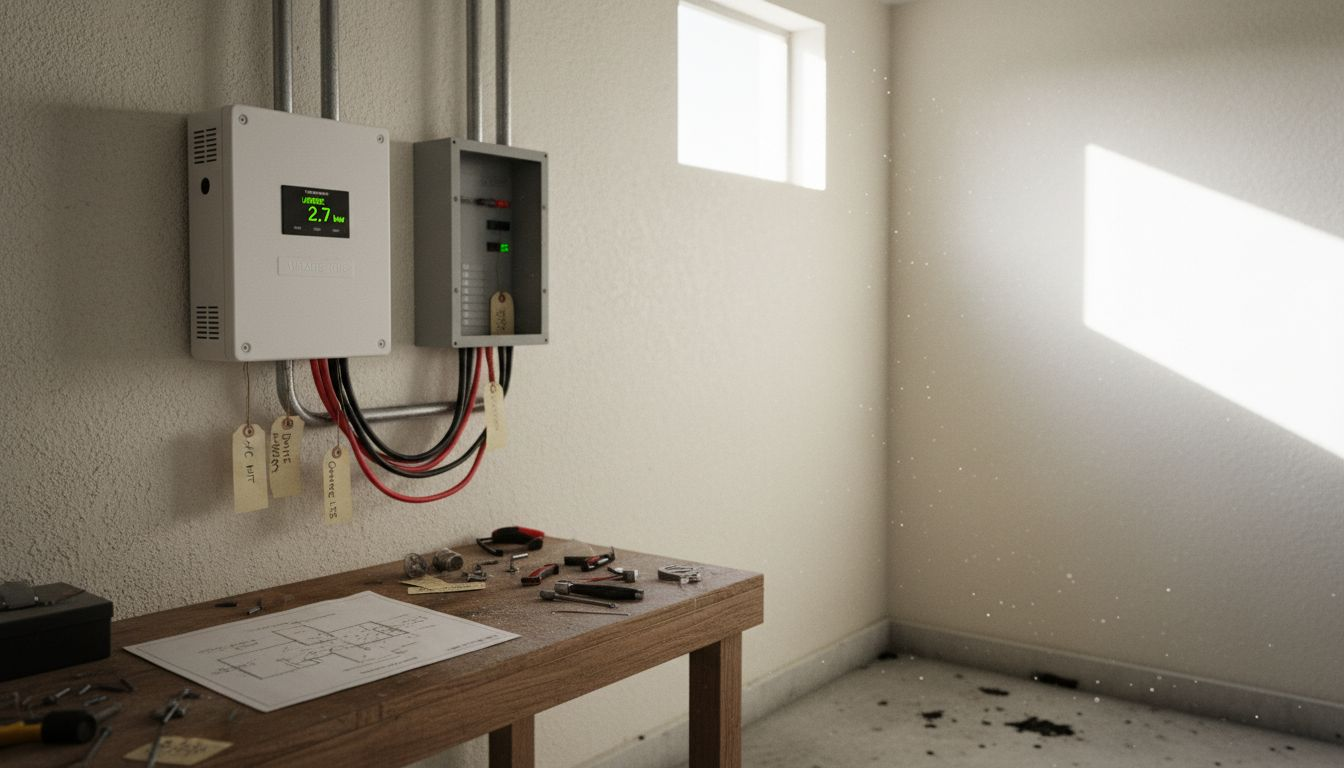
That’s where an inverter comes in. This device converts DC power to AC power, making it usable for everything from your refrigerator to your water heater.
The conversion process is efficient. Modern inverters waste very little energy during this transformation, typically operating at 95-98% efficiency.
Why Panel Configuration Matters
A single solar cell produces only about 0.5 to 0.6 volts. That’s not enough to power anything. Multiple cells must work together.
Solar panels string together many cells in series and parallel configurations:
- Series connection – Increases voltage by stacking cells
- Parallel connection – Increases current capacity
- Combined layout – Optimizes both voltage and amperage for your home’s needs
Your system’s design depends on your home’s energy consumption and roof space. This is why professional system sizing matters.
The photovoltaic effect converts sunlight directly into usable electricity with zero moving parts, zero emissions, and minimal maintenance—making it the foundation of residential solar power.
Pro tip: During your free onsite inspection, ask about system voltage and amperage sizing specific to your home’s electrical panel and annual energy usage patterns.
Types of Solar Panels and Main Components
Not all solar panels are created equal. The type you choose affects efficiency, cost, and long-term performance on your roof. Understanding your options helps you make the best decision for your home’s specific needs and budget.
Residential solar systems come in different configurations depending on your goals. Some homeowners want grid-connected systems that reduce utility bills. Others prefer off-grid setups with battery storage for complete energy independence. Your home’s situation determines which approach makes sense.
Common Solar Panel Types
Monocrystalline and polycrystalline silicon panels dominate the residential market today. The difference comes down to how the silicon is processed and how efficiently it converts sunlight.
Monocrystalline panels are made from single-crystal silicon. They’re more efficient—typically 18-22% conversion rates—but cost more upfront. They perform better in low-light conditions and take up less roof space.
Polycrystalline panels use silicon fragments melted together. They’re slightly less efficient at 15-17% conversion, but cost less. They work well for homes with plenty of roof space and full sun exposure.
Both types last 25-30 years and require minimal maintenance. The choice depends on your roof space, budget, and efficiency goals.
Here’s a concise comparison of the main residential solar panel types and their strengths:
| Panel Type | Efficiency Range | Best Application | Typical Cost |
|---|---|---|---|
| Monocrystalline | 18-22% | Small roofs, low-light | Higher upfront |
| Polycrystalline | 15-17% | Spacious, full sun roofs | Lower upfront |
| Thin-Film | 10-12% | Unusual surfaces, budget | Lowest cost |
Essential System Components
Your solar installation includes more than just panels mounted on your roof. Each component plays a critical role in converting sunlight to usable power.
Core components include:
- Solar modules (panels) – Convert sunlight into electricity
- Inverter – Changes DC power to AC electricity for your home
- Mounting hardware – Secures panels to your roof structure
- Electrical wiring and breakers – Safely routes power throughout your system
- Charge controller – Regulates power in off-grid systems with batteries
- Battery storage – Stores excess energy for later use (optional)
Grid-Connected vs. Off-Grid Systems
Most residential PV systems connect to the electrical grid, allowing you to use utility power when your panels aren’t producing. During sunny days, excess power flows back to the grid, earning credits on your bill.
Off-grid systems operate independently with battery backup. These work for remote properties but require larger upfront investment and regular battery maintenance.
Hybrid systems combine both approaches—grid connection plus batteries for backup power during outages.
Every component in your solar system is engineered to work together seamlessly, converting sunlight into electricity while protecting your home’s electrical infrastructure.
Pro tip: Ask your solar installer about panel warranties, inverter lifespan expectations, and whether your roofing can safely support the weight before committing to any system.
Residential Solar System Setup Explained
Setting up a residential solar system isn’t a one-size-fits-all process. Your home’s unique characteristics determine what size system works best and how much it will produce. A properly designed system maximizes energy savings while fitting your roof and budget.
The setup process begins long before panels go on your roof. It starts with understanding your home’s energy needs and assessing your property’s solar potential.
Step 1: Assess Your Home’s Energy Demand
Calculating your electrical energy demand is the foundation of proper system sizing. Review your utility bills from the past year to determine average monthly consumption.
Key metrics to gather:
- Your average monthly kilowatt-hour (kWh) usage
- Peak usage times during the year
- Any plans for increased consumption (electric vehicle, pool, etc.)
- Whether you want to offset 50%, 75%, or 100% of your electricity use
This data directly determines how many panels your system needs. Oversizing wastes money; undersizing leaves energy potential untapped.
Step 2: Evaluate Your Solar Resource
Not all properties receive equal sunlight. Your location, roof orientation, shading patterns, and local weather affect system performance.
Site assessment ensures minimal shading and optimal sunlight exposure. Professional installers use solar mapping tools to analyze your specific roof location, measuring how many hours of usable sunlight reach different areas.
Factors that impact solar potential:
- Geographic location and latitude
- Roof pitch and direction (south-facing is ideal)
- Shade from trees, buildings, or chimneys
- Local climate and seasonal weather patterns
- Roof age and structural integrity
Step 3: System Design and Component Selection
Once you know your energy needs and solar resource, engineers design your specific system. This includes selecting the right number and type of panels, choosing an appropriate inverter, and determining mounting solutions.
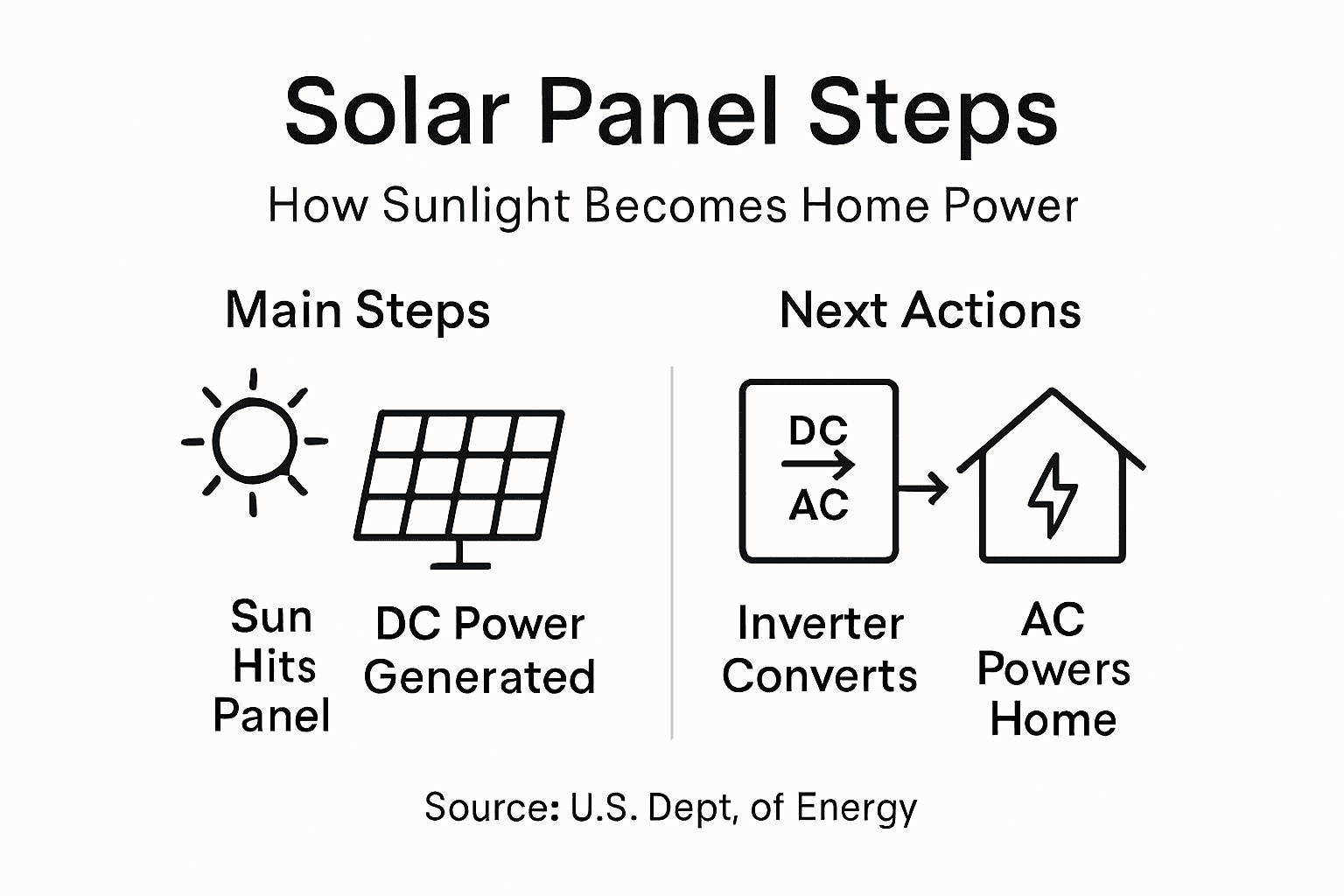
Designers account for system efficiency losses through derate factors. These factors reduce theoretical output to reflect real-world conditions like heat, wiring losses, and inverter inefficiency.
A well-designed system produces about 75-85% of its theoretical maximum capacity.
Step 4: Professional Installation
Proper installation protects both your home and your investment. Panels must be securely mounted, electrical connections properly sized, and the system integrated safely with your home’s electrical panel.
Your solar system’s long-term performance depends on precise installation that protects your roof, ensures safety, and maximizes energy production for decades.
Pro tip: Request a detailed system design report showing your estimated annual energy production and projected savings before signing any contract or beginning installation work.
Efficiency Factors, Costs, and Net Metering
Your solar system’s real-world performance depends on multiple factors beyond panel quality. Understanding efficiency losses and billing mechanisms helps you set realistic expectations for returns on your investment.
Not every kilowatt your panels theoretically produce reaches your home’s circuits. Environmental conditions, system design, and installation quality all affect actual output.
Key Efficiency Factors
Solar panel efficiency varies based on location, weather, and system design. Temperature is one of the biggest culprits—panels lose efficiency when they heat up on hot summer days.
Factors reducing panel output:
- Temperature – Panels lose 0.4-0.5% efficiency per degree Celsius above 25°C
- Shading – Even partial shade on one cell reduces output from the entire panel
- Panel angle and orientation – Suboptimal positioning reduces sunlight capture
- Dust and debris – Dirt buildup blocks light from reaching cells
- Inverter losses – Conversion from DC to AC costs about 2-5% efficiency
- Wiring losses – Long distances between panels and inverter increase resistance
These factors are why professional design and installation matter. A well-optimized system minimizes losses and maximizes energy production.
The following table summarizes key factors that influence solar system efficiency and typical loss percentages:
| Efficiency Factor | Impact on Output | Typical Loss Percentage |
|---|---|---|
| High Temperature | Reduces cell conversion | 0.4-0.5% per °C above 25°C |
| Inverter Losses | Conversion inefficiency | 2-5% |
| Shading | Decreases overall output | Up to 100% for affected cells |
| Dirty Panels | Blocks sunlight | 5-15% |
Understanding System Costs
Solar installation costs vary widely based on system size, equipment quality, and local labor rates. Average residential systems cost $15,000 to $25,000 before incentives.
Cost breakdown typically includes:
- Solar panels and mounting hardware (40-50% of total)
- Inverter and electrical components (15-20%)
- Installation labor (25-35%)
- Permits and inspections (5-10%)
Federal tax credits offset 30% of installation costs through 2032. Many states offer additional rebates or incentives that reduce your out-of-pocket expense significantly.
How Net Metering Works
Net metering allows homeowners to receive credit for excess electricity their panels send back to the grid. When your system produces more power than you’re using, that surplus flows to the grid and your meter runs backward.
During evening hours when panels produce nothing, you draw from stored grid power. Your utility bill reflects only the net difference between what you produced and what you consumed.
Net metering policies vary by state and utility company. Some offer dollar-for-dollar credits; others credit excess power at reduced rates. Check your specific utility’s policies before installation.
Your actual savings depend on local electricity rates, net metering credits, efficiency losses, and system design—making accurate pre-installation estimates critical for informed decisions.
Pro tip: Ask your installer for detailed production estimates showing monthly output by season, accounting for temperature effects and local weather patterns specific to your address.
Unlock Your Home’s Solar Potential with Expert Guidance from Sunflowers Energy
Understanding how solar panels work can seem complex but powering your home with clean, efficient energy should never be out of reach. If you want to overcome the challenges of optimizing your roof’s solar potential, navigating system design, or selecting the right components Sunflowers Energy provides trusted solutions tailored to your needs. Our team focuses on using advanced solar technology, premium materials, and precise system sizing to maximize your home’s energy savings while protecting your roof.
Explore our comprehensive offerings in residential solar systems designed to match your home’s unique orientation, energy demands, and budget.
Start transforming your energy future with a free onsite inspection and personalized quote from Sunflowers Energy. Get expert advice about panel types, efficiency factors, and installation best practices that ensure decades of reliable power. Visit Sunflowers Energy today and take the first step toward sustainable savings and home protection.
Frequently Asked Questions
What are solar panels made of?
Solar panels are primarily composed of interconnected photovoltaic (PV) cells, typically made from silicon or other semiconductor materials, which convert sunlight into electricity.
How do solar panels generate electricity on cloudy days?
Solar panels can still generate electricity on cloudy days, although at a reduced capacity. The photovoltaic effect occurs even in diffuse light, meaning that they can produce power without direct sunlight.
What factors affect the efficiency of solar panels?
The efficiency of solar panels can be impacted by factors such as temperature, shading, panel angle and orientation, dirt accumulation, inverter efficiency, and wiring losses. Each of these can contribute to varying levels of output.
How long do solar panels typically last?
Modern solar panels come with warranties lasting 25-30 years and can often continue to produce electricity for 40 years or more. They degrade at minimal rates, usually around 0.5% per year.
Recommended
- Role of Solar Panels in Homes – Real Cost Savings and Value – Sunflowers Energy LLC A Roofing and Solar Companys
- Solar Installation Steps: Maximizing Home Efficiency – Sunflowers Energy LLC A Roofing and Solar Companys
- Cómo instalar paneles solares paso a paso en casa – Sunflowers Energy LLC A Roofing and Solar Companys
- Solar Power for Beginners: Savings and Sustainability – Sunflowers Energy LLC A Roofing and Solar Companys