
Why Acting Fast on Roof Leaks Saves You Money
The best wet roof patch products can stop an active leak in minutes, even during a rainstorm. If you have water dripping through your ceiling, here are your top options:
- Henry 208 Wet Patch – Best for instant leak stopping in standing water
- Loctite PL Roof and Flashing Polyurethane Sealant – Best for seams and flashing repairs
- Liquid Rubber Waterproof Sealant – Best for filling larger cracks and gaps
- Gorilla Waterproof Patch & Seal Tape – Best for quick, no-mess repairs
- Rubberseal Liquid Rubber Waterproofing – Best for UV protection and energy savings
A small leak today can lead to thousands of dollars in water damage, ruined insulation, and high energy bills. Daily exposure to the elements degrades roofs, creating weak spots where water seeps in.
The good news is you don’t need to replace your entire roof to stop most leaks. Modern wet roof patch products are designed to seal active leaks, even in driving rain or standing water. They create a waterproof barrier that protects your home from further damage while you plan for permanent repairs.
This guide breaks down the different types of sealants and helps you choose the right product for your roof and climate. Whether you’re dealing with damaged flashing, cracked shingles, or a compromised vent seal, we’ll show you which wet roof patch delivers the fastest, most reliable fix.
What Makes a Great Wet Roof Patch Sealant?
Choosing the best wet roof patch means finding a durable repair that holds up against the elements, especially in the harsh weather of Arizona, Colorado, Florida, Louisiana, Oklahoma, and Texas. A great sealant needs these key characteristics:
- Water Resistance: It must create an impenetrable barrier against water, adhering and curing even on damp or actively wet surfaces.
- Durability: A good sealant withstands sun, rain, hail, and wind without cracking, peeling, or losing adhesion.
- Flexibility: It must flex with the roof’s expansion and contraction due to temperature changes, preventing the seal from breaking.
- Wet Surface Adhesion: The defining feature of a “wet patch” is its ability to stick to wet surfaces. Products like Henry 208 Wet Patch are ideal for emergency repairs in standing water.
- UV Reflectivity: Sealants with high UV reflectivity protect the roof from sun damage and can lower energy costs, a major benefit in states like Florida or Texas.
- Ease of Application: Emergency patches should be straightforward for a homeowner to apply, available in formats like caulk tubes, liquids, or tapes.
- Temperature Range: A versatile sealant performs well in a wide range of temperatures, from the heat of summer to the cold of winter.
For more information about professional Roofing services, we encourage you to visit our dedicated page.
Key Sealant Types on the Market
Understanding the main types of wet roof patch sealants is the first step to finding the right one for your needs:
- Silicone Sealants: Offer excellent water resistance, flexibility, and UV protection. They are long-lasting but come at a higher price.
- Acrylic Sealants: Often water-based, these are cost-effective and good at reflecting UV rays but can be less effective in standing water.
- Polyurethane Sealants: Excel in water resistance and adhesion, making them durable and flexible for heavy rain and moving joints.
- Rubberized Asphalt Cements: Heavy-duty options like Henry 208 Wet Patch are designed for instant leak stopping, even in standing water.
- Sealant Tapes: Products like Gorilla Waterproof Patch & Seal Tape provide a quick, mess-free solution with an instant waterproof barrier.
Solvent-Based vs. Water-Based for Wet Conditions
The choice between solvent-based and water-based sealants is critical for a wet roof patch.
Water-based sealants (many acrylics) are easier to clean and have lower odors. However, their adhesion can be compromised on very wet surfaces or if it rains during curing. They perform best on damp, not saturated, surfaces.
Solvent-based sealants (many polyurethanes and rubberized asphalts) are designed for true wet patch applications. They displace water and adhere aggressively to wet or even submerged surfaces.
- Adhesion in Rain: They are designed for 100% wet surface adhesion, stopping leaks instantly in standing water or driving rain.
- Curing and Durability: While curing may take longer, their initial bond is superior in wet conditions, and they often offer excellent long-term durability.
- Cleanup: They have higher VOCs and require mineral spirits for cleanup.
For active leaks in any weather, solvent-based sealants are the superior choice for a wet roof patch.
Comparing the Top Sealant Materials
Choosing the best wet roof patch requires understanding the core materials. Each has a unique composition that affects its performance, longevity, and cost.
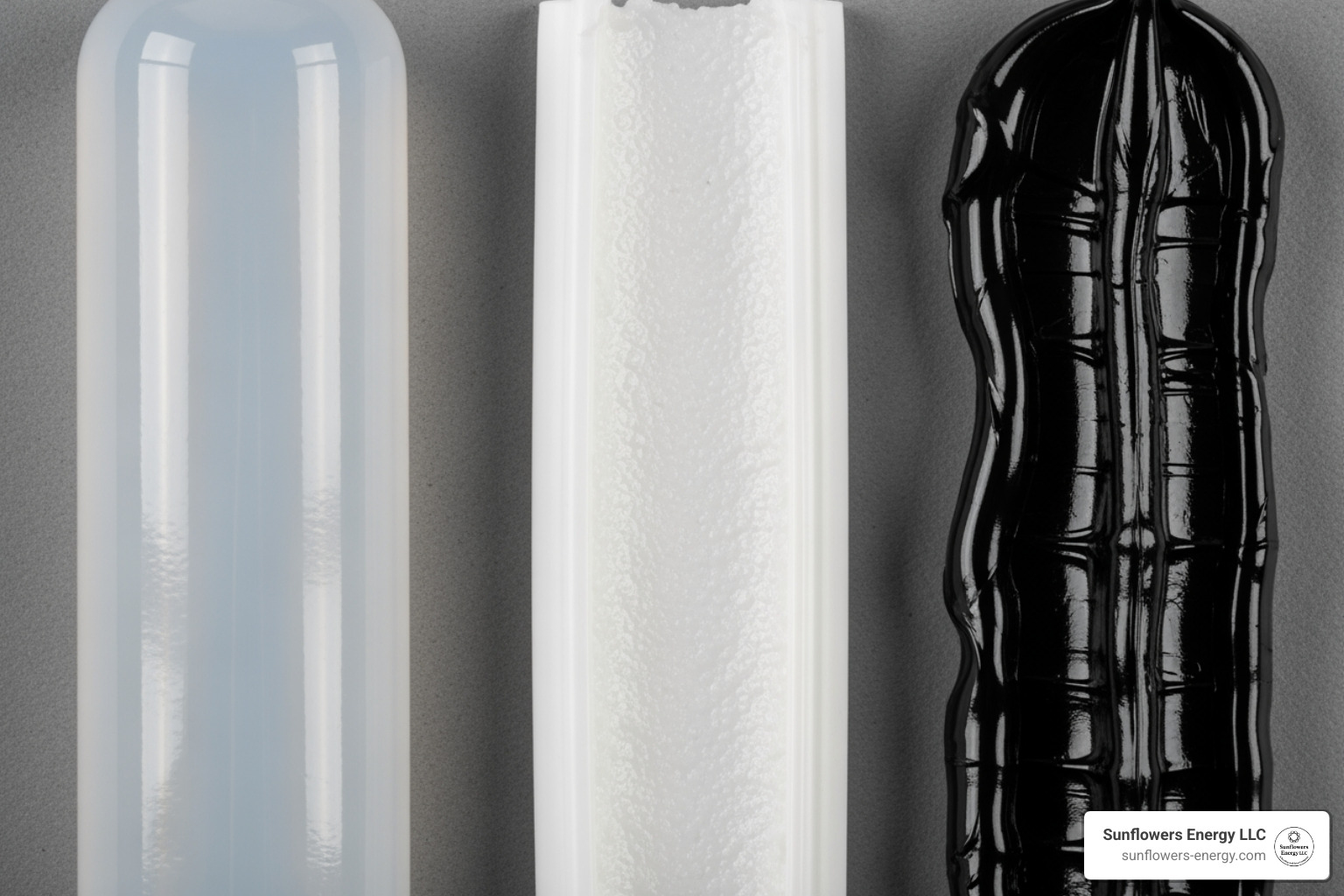
Here’s a quick comparison of the three primary types:
| Feature | Silicone | Acrylic | Polyurethane |
|---|---|---|---|
| Water Resistance | Excellent (can withstand ponding water) | Good (less effective in standing water) | Exceptional (ideal for heavy rain/snow) |
| UV Protection | Excellent (reflects up to 90% of UV rays) | Good (especially white/light colors) | Good |
| Durability/Longevity | Very long (15-20+ years) | Long (10-15 years) | Very long (10-20 years) |
| Flexibility | High | Moderate to High | High |
| Typical Cost | Higher | Moderate | Moderate to High |
Silicone: The Premium All-Rounder
Silicone sealants are a premium choice for a best wet roof patch due to their superior protection.
- Excellent UV Protection: They resist UV degradation and can reflect up to 90% of UV rays, protecting roofs in sun-drenched regions like Florida, Texas, or Arizona and helping reduce energy costs.
- Superior Water Resistance: Silicone creates a highly effective waterproof barrier, making it suitable for flat roofs where water may pool.
- High Flexibility & Longevity: They remain elastic across a wide temperature range and can last 15-20 years or more.
- Drawbacks: The main drawbacks are a higher price point and potential adhesion issues on certain surfaces or over other sealant types.
Acrylic: The Reflective & Affordable Choice
Acrylic sealants balance performance and affordability. They are often water-based, making them easy to use.
- High Solar Reflectivity: White or light-colored acrylics are great at reflecting sunlight, which helps lower roof temperatures and cooling costs in hot climates.
- Good Durability & Cost: They offer good durability (10-15 years) and are a budget-friendly option.
- Water-Based: This means easier cleanup and lower VOCs.
- Drawback: Their main weakness is being less effective in areas with prolonged standing water, as continuous submersion can cause deterioration.
Polyurethane: The Tough & Water-Resistant Workhorse
Polyurethane sealants are excellent for demanding repairs where water resistance and adhesion are critical.
- Exceptional Water Resistance: They form strong, waterproof bonds ideal for areas with heavy rain or snow, like Colorado or the Gulf Coast.
- High Impact Resistance & Flexibility: Their tough nature withstands physical impacts, and they offer excellent elasticity for moving joints around flashing or vents.
- Strong Adhesion: Polyurethanes adhere extremely well to a wide range of roofing materials, including metal, asphalt, and concrete.
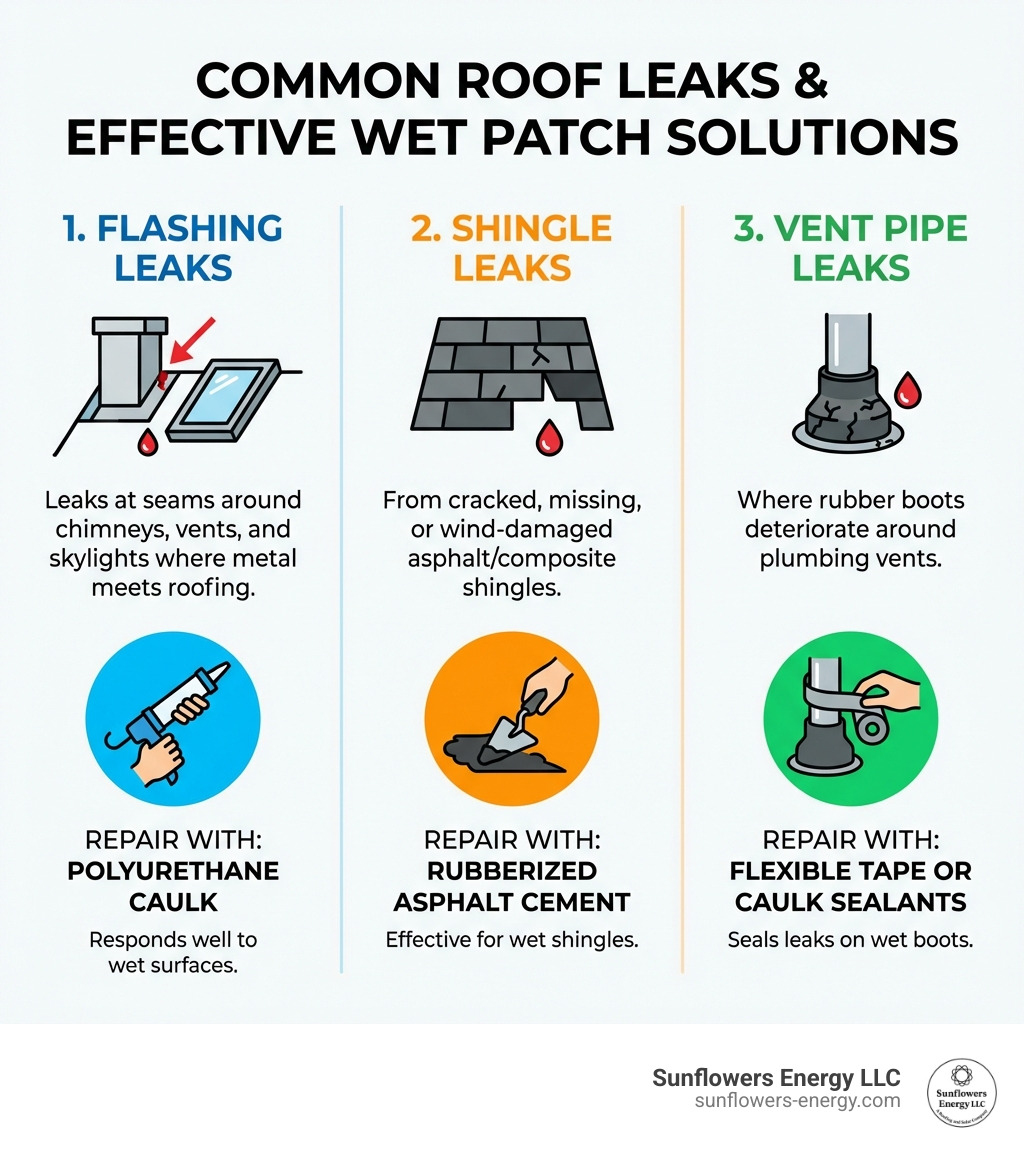
- Ideal for Flashing and Seams: Their combination of strength and flexibility makes them perfect for sealing roof penetrations.
For a deeper dive into how sealants perform in various conditions, you might find this sealant performance report insightful.
Our Top Picks for the Best Wet Roof Patch Solution
When an emergency strikes, you need the best wet roof patch that’s ready for action. Here are our top picks for specific repair scenarios.
For Instant Leak Stopping in Standing Water
For active leaks in pooling water, you need a heavy-duty solution that works immediately.
Our top recommendation: Henry 208 Wet Patch and Henry 209XR Extreme Rubberized Wet Patch.
- Why they work: These are robust, asphalt-based cements that stop leaks instantly, even in standing water. They have excellent wet adhesion and are applied with a trowel for a thick, immediate seal. The rubberized 209XR version offers improved flexibility for moving joints and can be applied in colder temperatures.
For Sealing Seams and Flashing
Flashing and seams are common leak points that require a flexible, adhesive sealant.
Our top recommendation: Loctite PL Roof and Flashing Polyurethane Sealant and Sashco Through The Roof.
- Why they work: These polyurethane caulks are highly durable and flexible, accommodating movement between different roof components. They stick to almost any surface and are ideal for creating a thick, controllable bead around vents, chimneys, and skylights.
For High UV Exposure and Energy Savings
In sunny regions like Arizona, Florida, and Texas, a reflective sealant protects your roof and improves energy efficiency.
Our top recommendation: Rubberseal Liquid Rubber Waterproofing and Liquid Rubber Color Waterproof Sealant.
- Why they work: These liquid rubber or silicone coatings form a seamless, highly reflective membrane. They offer high solar reflectivity to keep roofs cool, resist ponding water, and provide excellent long-term durability. They are typically applied with a brush or roller.
Learn about energy savings with Solar panels, a fantastic way to further boost your home’s energy efficiency.
For Quick and Easy Tape Repairs
For a fast, no-mess fix without special tools, tape sealants are a perfect choice.
Our top recommendation: Gorilla Waterproof Patch & Seal Tape and Liquid Rubber Peel & Stick Seam Tape.
- Why they work: These peel-and-stick tapes use an aggressive butyl adhesive to create an instant, waterproof barrier. They are much thicker and more adhesive than duct tape, making them great for quickly sealing cracks, tears, or seams with minimal cleanup.
A Homeowner’s Guide to Application and Selection
Tackling a roof leak can feel daunting, but with the right product and a little know-how, you can effectively apply a wet roof patch. However, safety and proper technique are paramount.
Choosing the best wet roof patch for your roof type
The best patch depends on your specific roof and climate.
- Roofing Materials:
- Asphalt Shingles: Rubberized asphalt cements and polyurethane sealants work well. Tapes offer quick fixes.
- Metal Roofs: Polyurethane and silicone sealants provide the flexibility needed for metal’s expansion and contraction.
- Flat Roofs (EPDM, TPO): Silicone or liquid rubber coatings are best due to their superior resistance to ponding water.
- Climate Considerations:
- Hot Climates (AZ, TX, FL): UV-reflective sealants like silicone or acrylic improve energy efficiency.
- Cold Climates (CO, OK): Choose sealants with a wide application temperature range, like Henry 208R, which works down to 0°F.
Unsure about your roof type or the extent of damage? Don’t guess! We offer a Free Roof Inspection to help you identify your needs.
Application tips for the best wet roof patch results
Proper application is key to a lasting repair.
- Safety First: Always use a stable ladder and wear non-slip shoes. Avoid working on a wet or icy roof, as it can be extremely dangerous.
- Clean the Area: Remove loose debris like leaves, dirt, and old sealant to improve adhesion, even for wet-application products.
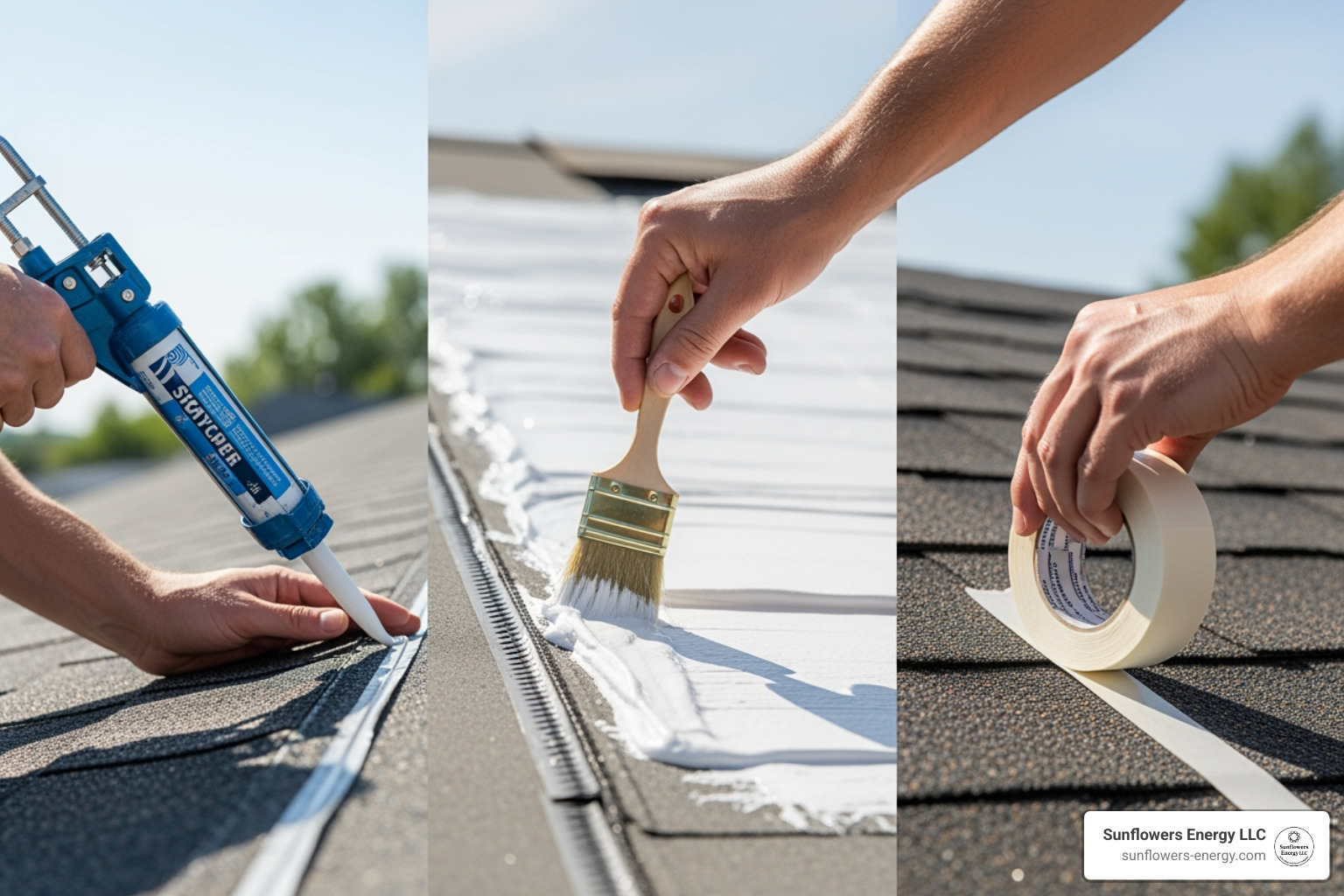
- Apply the Product: Use the correct tool for your product—a caulk gun for tubes, a brush/roller for liquids, or a trowel for cements. Apply a generous, even layer over the damaged area.
- Feathering edges: For liquid or trowel-applied patches, smooth the edges to prevent water from pooling around the repair.
- Using reinforcing fabric: For larger cracks, embed fiberglass mesh into the wet sealant for extra strength.
- Curing times: Most sealants take 8-24 hours to dry. Avoid disturbing the patch during this time.
- Avoiding common mistakes: Don’t apply the material too thinly, always read manufacturer instructions, and never compromise on safety.
Frequently Asked Questions about Wet Roof Patches
Here are answers to common questions about emergency roof repairs.
How long does a wet roof patch last?
The lifespan of a wet roof patch depends on the material and application quality. It’s generally a temporary fix to buy time for a permanent repair.
- Material Longevity: High-quality silicone and polyurethane sealants can last 10-20+ years, while rubberized asphalt cements may last 7-10 years.
- Influencing Factors: Longevity is affected by proper application and environmental factors like the harsh UV rays and weather in Arizona, Colorado, Florida, Louisiana, Oklahoma, and Texas.
- When to Call a Pro: If a leak persists or is extensive, it’s time for a professional inspection and permanent repair.
Can you apply a roof patch in the rain?
Yes. The main feature of a wet roof patch is its ability to be applied in wet conditions.
- How it Works: Products like Henry 208 Wet Patch are formulated for 100% wet surface adhesion. They contain solvents that displace water to bond directly to the wet substrate, stopping leaks instantly even in driving rain.
- Safety First: While the product works in the rain, your safety is paramount. Wet roofs are extremely slippery and dangerous. If possible, wait for conditions to improve or call a professional.
How do you remove old roof sealant?
Removing old, failed sealant is a necessary step before applying a new patch or permanent repair.
- Tools and Technique: Use a putty knife or wire brush to scrape away the old material. Work gently to avoid damaging the underlying roofing.
- Soften the Sealant: For stubborn sealants, a solvent-based caulk remover or mineral spirits can help. Carefully applied heat from a heat gun can also work, but use extreme caution to avoid damaging the roof.
- Prepare the Surface: Once the old sealant is gone, clean the area thoroughly to ensure the new patch adheres properly.
Secure Your Roof for the Long Term
Understanding your options for a wet roof patch empowers you to stop a leak fast. We’ve covered everything from silicone and polyurethane to acrylics and tapes.
While these patches are a crucial first response, they are often temporary. Addressing the root cause of the leak is essential for a long-term solution. A professional assessment can diagnose underlying issues like damaged flashing or aged shingles that a simple patch won’t fix.
At Sunflowers Energy, we understand the roofing challenges in Arizona, Colorado, Florida, Louisiana, Oklahoma, and Texas. Our expertise in residential roofing means we provide lasting, durable solutions, not just quick fixes. We combine superior materials and expert installation to protect your home and make it more energy-efficient.
Don’t let a small leak become a major problem. Once your emergency patch is applied, take the next step. Get a Free Quote for a permanent Roofing solution from our team of experts. We’re here to help you weather any storm.