
Most roof problems don’t announce themselves with a dramatic leak in the middle of your living room. They start small, a curled shingle here, a dark streak there, and by the time you notice, the damage has already spread. Knowing the signs you need a roof replacement early can save you thousands in structural repairs and prevent water damage that quietly destroys insulation, drywall, and even your home’s framing. The challenge is that most homeowners aren’t sure what to look for, or when a repair is enough versus when it’s time for a full replacement.
At Sunflowers Energy LLC, we inspect roofs every day across residential and commercial properties. We’ve seen firsthand how a delayed replacement turns a manageable project into a costly emergency. That hands-on experience is exactly what shaped this guide, real patterns we encounter on actual job sites, not recycled advice from a textbook.
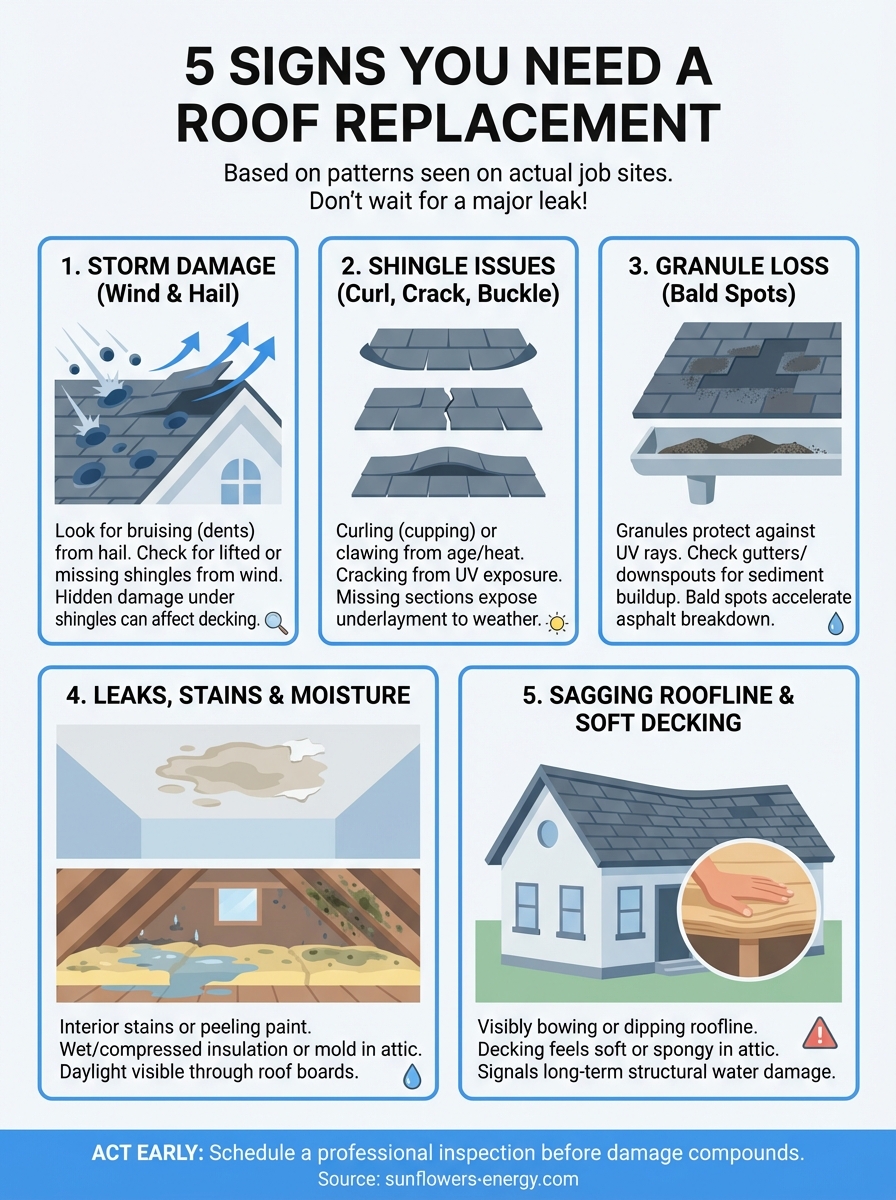
Below, we break down five clear warning signs that your roof is past its prime, explain why each one matters, and walk you through what to do once you spot them. Whether you’re dealing with storm damage or simply an aging roof, this list will help you make a confident, informed decision about your next step.
1. Your roof has storm damage from wind or hail
Storm damage is one of the most common signs you need a roof replacement, and it’s also one of the easiest to underestimate. A storm that passes quickly can still leave behind hidden structural damage that worsens with every rain that follows. Wind and hail hit roofs differently, but both can compromise your roof’s ability to protect your home.
What you can spot from the ground
You don’t need to climb onto your roof to get a useful first look. From the ground, check your shingles for visible bruising, which shows up as dark, circular dents caused by hail impact. Wind damage often lifts or tears shingles along the edges, so look for missing shingles or pieces that are visibly raised or shifted. Also scan your yard and gutters for shingle debris after any major storm.
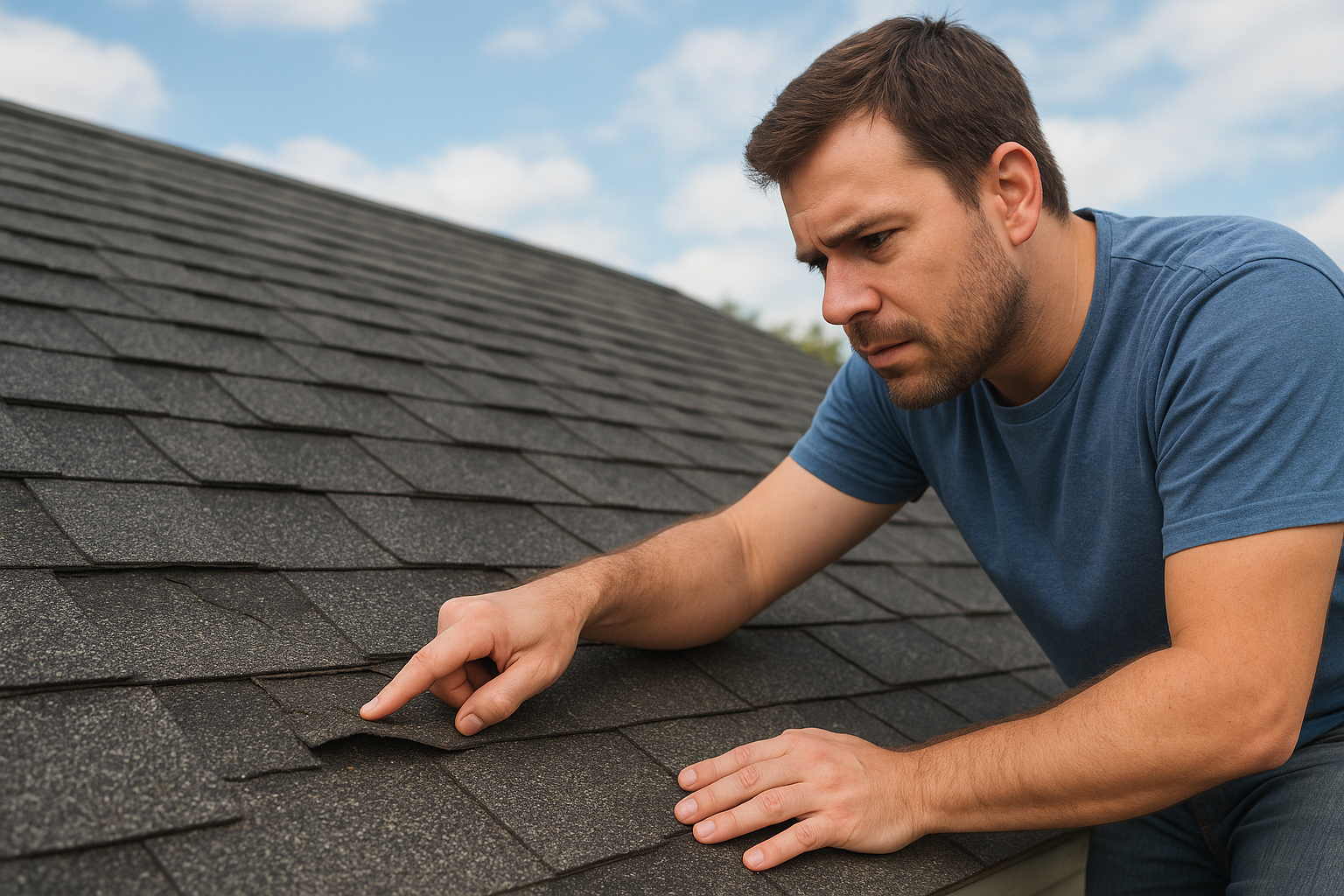
If you spot shingle granules collecting in your gutters or downspouts after a storm, that’s a strong indicator hail has stripped the protective coating right off your shingles.
What storm damage can hide under the shingles
Surface damage is only part of the picture. Hail and high winds can crack the underlayment, which is the water-resistant barrier beneath your shingles, without leaving obvious signs on top.
Water then infiltrates slowly through those cracks and saturates the roof decking and insulation before you ever notice a stain on your ceiling. That hidden damage is exactly why a ground-level check on its own isn’t always enough.
What to do next and when to call a roofer
After any significant storm, schedule a professional roof inspection as soon as possible. Document everything with photos before making any temporary repairs, especially if you plan to file an insurance claim.
A licensed roofer can identify damage that isn’t visible to an untrained eye and give you a clear answer on whether a targeted repair or a full replacement is the right move for your home.
2. Your shingles curl, crack, buckle, or go missing
Shingle condition is one of the most visible signs you need a roof replacement. When shingles curl at the edges, crack down the middle, buckle under heat, or disappear entirely, your roof can no longer form a proper barrier against water and wind.
What this damage looks like up close
Shingle damage shows up in several distinct ways that are worth knowing by name:
- Cupping: edges curl upward, usually from moisture imbalance between the top and underside of the shingle
- Clawing: the middle lifts while edges stay flat, often from age and heat stress
- Cracking or splitting: shingles break apart from prolonged UV exposure
Any of these patterns means the shingles are no longer protecting the underlayment beneath them.
Why shingle failure often spreads fast
Damaged shingles expose the underlayment and decking to direct weather. Once one area weakens, water seeps under adjacent shingles and lifts them too, turning a small problem into a wide section of compromised roof within a single season.
If you notice several shingles failing in the same area, that zone rarely improves with a patch repair alone.
What to do next and when replacement beats repairs
Replacing a handful of cracked shingles is reasonable if the rest of your roof is in solid condition. But if shingle failure covers more than 30% of your roof surface, a full replacement is almost always the more cost-effective path forward.
3. You see granule loss and bald spots
Granule loss is one of the more subtle signs you need a roof replacement, but it’s a reliable indicator that your shingles are wearing out. Asphalt shingles rely on their granule coating to block UV rays, heat, and moisture from reaching the material underneath. When those granules disappear, the exposed surface breaks down fast.
How to check for granules in gutters and downspouts
Check your gutters and downspouts after rain for gritty, dark sediment that resembles coarse sand. That material is your shingle’s protective layer washing off the roof. Look for these specific signs during your check:
- Granule buildup collected at downspout exits after storms
- Dark, bald patches on shingles that are visible from the ground
- Uneven coloring across your roof’s surface where granules have worn thin
Why granule loss shortens shingle life
Without granules, UV rays attack the asphalt layer directly, drying it out and causing shingles to crack well before their rated lifespan ends. Granule loss also creates uneven water runoff, which concentrates moisture in low spots and speeds up wear in those areas.
Once bald spots appear across multiple shingles, the clock on your roof’s useful life moves significantly faster.
What to do next and how to prevent more loss
Schedule a professional inspection to assess how far the granule loss has spread across the full roof surface. Keeping your gutters clean after each storm lets you track how much granule material is washing off over time and catch accelerating deterioration before it becomes a larger structural issue.
4. You notice leaks, stains, or attic moisture
Water intrusion is one of the most urgent signs you need a roof replacement, and it rarely stays contained to a single spot. By the time you notice a stain on your ceiling, water has already been moving through your roof system for some time.
Indoor signs that point to roof failure
Look for water stains, dark discoloration, or peeling paint on your ceilings and upper walls. In your attic, check for these specific warning signs:
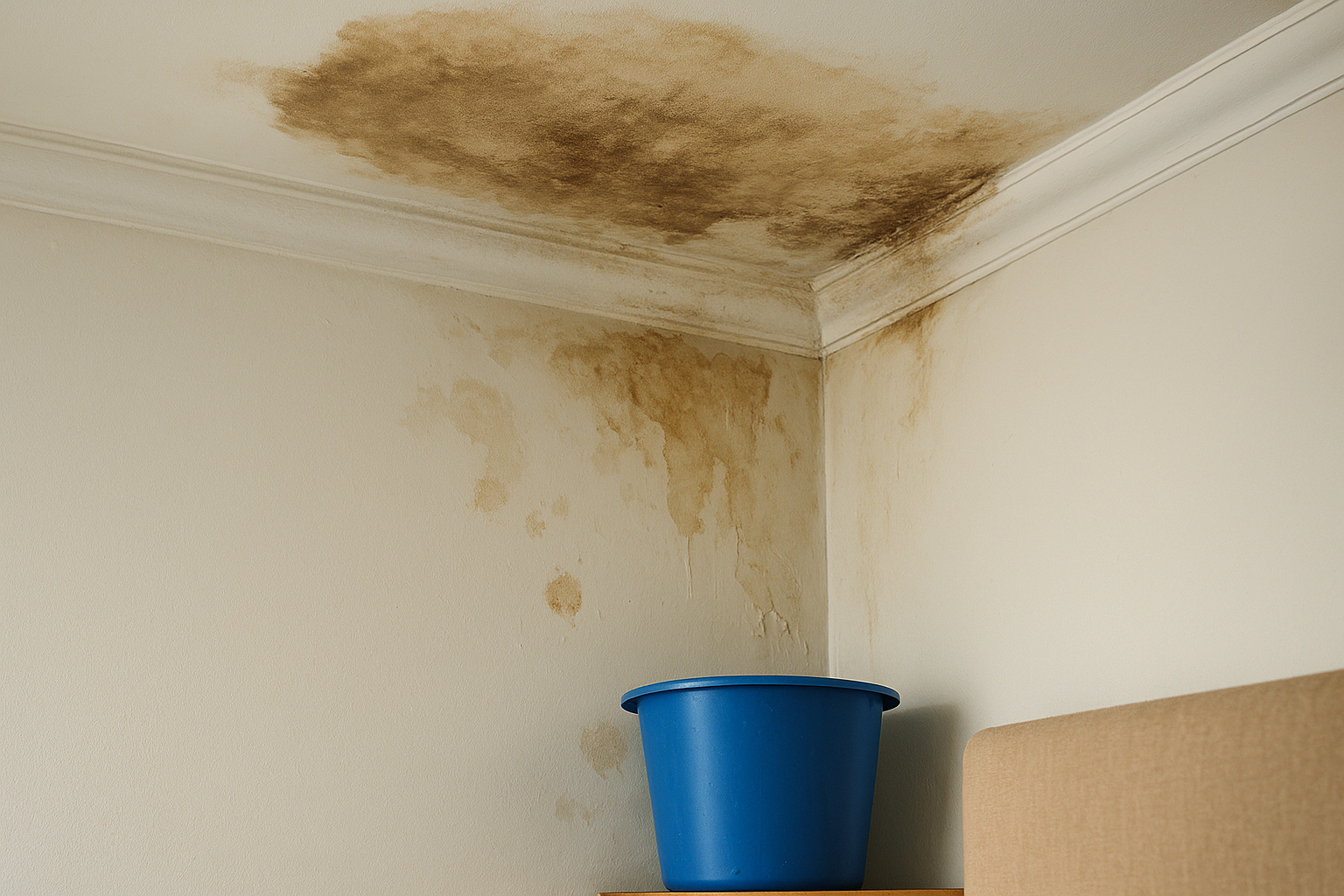
- Wet or compressed insulation that has absorbed moisture over time
- Mold or mildew growth along rafters or roof boards
- Daylight visible through roof boards, confirming active gaps in your roof
Why leaks can show up far from the real problem
Water travels along rafters and roof decking before it drips down, so the stain inside your home can be several feet away from the actual breach. This means locating the true source requires a trained eye on your roof, not just a look at your ceiling.
Never assume the leak source is directly above where the interior stain appears.
What to do next to limit damage immediately
Place buckets to catch dripping water and move belongings away from the affected area right away. Then call a licensed roofer to locate the breach and determine whether a targeted repair or full replacement is the right step before more interior damage builds up.
5. Your roofline sags or the decking feels soft
A sagging roofline signals structural failure, not just surface wear. This is one of the most serious signs you need a roof replacement, and it means your roof system can no longer carry its load safely.
Structural warning signs you should not ignore
Scan your roofline from multiple angles around your property. A visibly bowed ridge or dipping roof section tells you the decking has given way. Inside your attic, press lightly on the roof boards. Soft or spongy wood confirms that moisture has been rotting the structure from underneath.
What sagging can mean for safety and costs
Sagging decking reflects long-term water infiltration that has reached the structural layer. Left alone, it spreads to rafters and framing, turning a roof replacement into a far more expensive structural repair.
A sagging roof does not stabilize on its own. Each storm adds weight and pushes the damage further.
What to do next and why this needs urgent evaluation
Call a licensed roofing contractor immediately for a structural inspection. A trained professional can map how far the damage has spread and determine whether emergency stabilization or a full replacement is the right course of action for your home.
Next Steps
If any of the signs you need a roof replacement from this list look familiar, the right move is to act before the damage compounds. Waiting on a compromised roof rarely saves money. It typically turns a manageable replacement into a far larger and more expensive structural project.
Start by documenting what you see. Photos of shingle damage, granule loss, or interior stains give a roofer a clearer starting point and support any insurance claim you may need to file. Then schedule a professional inspection from a contractor who can assess the full picture, not just the surface.
At Sunflowers Energy LLC, we provide free on-site inspections with no obligation. Our team will walk your property, identify every problem area, and give you a straight, honest recommendation on whether a targeted repair or a full replacement is the right call for your home.