Solar Energy Terminology Guide for Homeowners (2026)
When you start researching solar panels for your home, you quickly encounter terms like photovoltaic cells, inverters, and efficiency ratings that can feel overwhelming. Understanding this specialized vocabulary is not just about sounding knowledgeable. It directly impacts your ability to evaluate system proposals, compare installer quotes, and make decisions that maximize your investment. This guide breaks down essential solar energy terms into practical explanations that help you navigate the solar market with confidence. You will learn the language of solar professionals and gain clarity on what matters most for your property’s energy future.
Table of Contents
- Key takeaways
- Understanding the core solar energy terms
- Comparing solar panel types and efficiency ratings
- Key solar system components and installation terminology
- Using solar metrics and maintenance terms to optimize savings
- Explore our solar and roofing solutions to power your home sustainably
- Frequently asked questions
Key Takeaways
| Point | Details |
|---|---|
| Core solar terms | Photovoltaic cells convert sunlight into DC electricity, and inverters transform that DC into AC to power home devices. |
| Efficiency range clarified | Under standard testing conditions, typical panel efficiency ranges from 20 to 25 percent. |
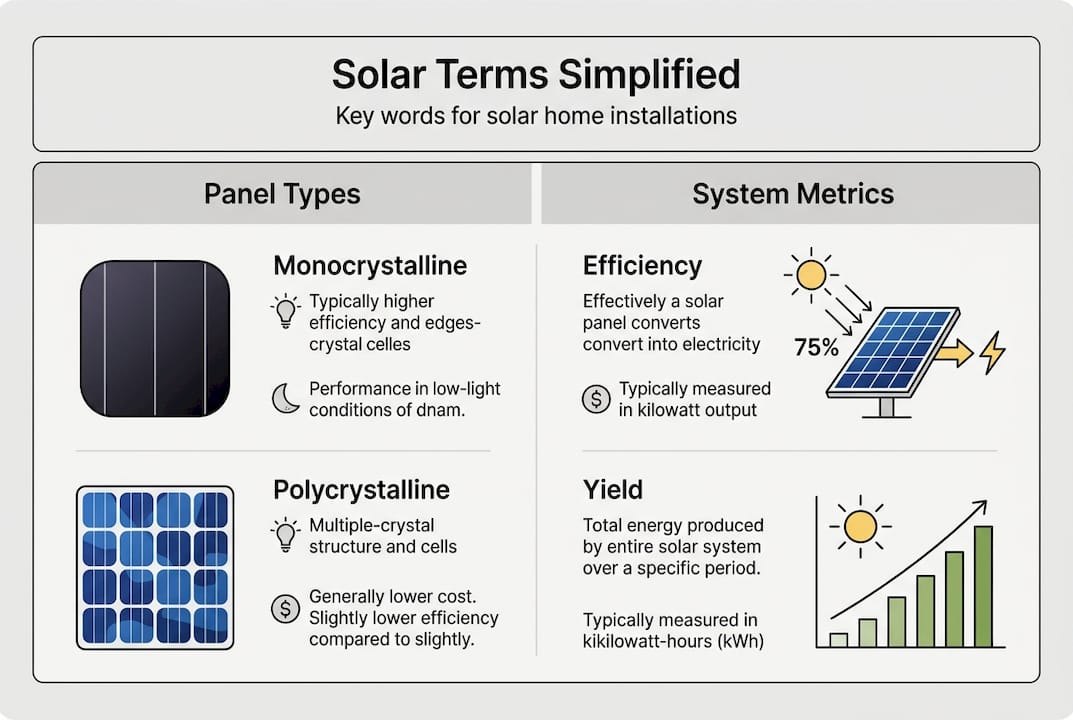
| Panel types overview | Monocrystalline offer the highest efficiency, polycrystalline provides moderate efficiency at lower cost, and premium panels commonly reach about 24 to 25 percent. |
| STC importance | When reviewing specifications, check efficiency under STC rather than ideal laboratory claims. |
Understanding the core solar energy terms
The foundation of solar energy begins with photovoltaic cells converting sunlight into DC electricity, which are the semiconductor units embedded in every solar panel. These cells absorb photons from sunlight and release electrons, creating direct current electricity. Your home appliances run on alternating current, which is where the conversion process becomes critical.
Direct current flows in one direction from the solar panels, while alternating current reverses direction periodically to power your household devices. This fundamental difference explains why every solar system needs an inverter. The inverter transforms DC electricity from your panels into AC electricity compatible with your home’s electrical system and the utility grid.
Efficiency ratings measure how much sunlight a panel converts into usable electricity. Under standard testing conditions, typical efficiency ranges from 20-25%, meaning a panel converts that percentage of available solar energy into electrical power. These ratings help you compare different panel options and understand how solar panels work steps from light absorption to power delivery.
Pro Tip: When reviewing panel specifications, always check efficiency ratings under STC (standard testing conditions) rather than manufacturer claims under ideal laboratory settings.
Key terminology to remember:
- Photovoltaic (PV) cells are the building blocks that convert light into electricity
- DC electricity flows directly from panels in one direction
- AC electricity alternates direction and powers your home
- Inverters bridge the gap between panel output and home usage
- Efficiency percentages tell you how much sunlight becomes usable power
Understanding these core terms gives you the vocabulary to ask informed questions about system design and solar panel efficiency explained in proposals. You can now evaluate whether quoted efficiency numbers match industry standards and whether the inverter specifications suit your energy needs.
Now that you understand basic solar terms, let’s compare different types of solar panels and their efficiencies to gain clearer insight.
Comparing solar panel types and efficiency ratings
Three main panel types dominate the residential solar market, each with distinct efficiency characteristics and cost profiles. Monocrystalline panels use single-crystal silicon wafers, offering the highest efficiency and longest lifespan. Polycrystalline panels contain multiple silicon crystals, providing moderate efficiency at lower costs. Thin-film panels use lightweight materials with lower efficiency but greater flexibility for unique installations.
| Panel Type | Efficiency Range | Typical Cost | Key Advantages | Main Drawbacks |
|---|---|---|---|---|
| Monocrystalline | 20-25% | Higher | Best efficiency, longevity, space-saving | Premium pricing |
| Polycrystalline | 15-20% | Moderate | Cost-effective, reliable performance | Lower efficiency, more space needed |
| Thin-film | 10-13% | Lower | Flexible, lightweight, aesthetic options | Lowest efficiency, shorter lifespan |
Premium panels achieve efficiencies around 24-25%, representing the cutting edge of current solar technology. These high-efficiency options make sense when roof space is limited or when you want maximum power generation from available area. The efficiency difference between a 20% panel and a 25% panel means 25% more electricity from the same square footage.

Your panel choice depends on several practical factors beyond efficiency numbers. Budget constraints, available roof space, aesthetic preferences, and local climate conditions all influence the optimal selection. A larger roof area might accommodate more polycrystalline panels at lower cost, matching the output of fewer monocrystalline panels.
Pro Tip: Calculate total system cost per watt rather than focusing solely on panel price, since higher efficiency panels often deliver better long-term value despite higher upfront costs.
When reviewing types of solar panels explained for your property, consider these selection factors:
- Available roof space and orientation determine panel quantity needs
- Local weather patterns affect which panel type performs best
- Budget flexibility influences whether premium efficiency makes financial sense
- Aesthetic concerns may favor certain panel colors or profiles
- Expected system lifespan should match your property ownership timeline
Verifying efficiency ratings during purchase requires checking manufacturer datasheets for STC testing results. Standard testing conditions include specific light intensity, cell temperature, and solar spectrum measurements. Real-world performance typically runs slightly lower than STC ratings, but these standardized numbers let you make apples-to-apples comparisons between products.
The guide on how to choose solar panels for your home walks through additional selection criteria including warranty terms, manufacturer reputation, and degradation rates over time. Understanding these efficiency fundamentals prepares you to evaluate installer recommendations with informed perspective.
Having explored panel types and efficiencies, next we will clarify important terms related to solar system components and installation that impact your property’s setup.
Key solar system components and installation terminology
Beyond the panels themselves, several critical components work together to create a functional solar energy system. The inverter stands as the most important piece after the panels, converting DC electricity into AC power your home can use. String inverters handle multiple panels connected in series, while microinverters attach to individual panels for independent optimization.
Mounting racks secure panels to your roof structure, engineered to withstand wind loads and weather exposure for decades. These aluminum or stainless steel frames must attach properly to roof rafters without compromising your roofing system’s waterproof integrity. Wiring connects all components, sized appropriately for current loads and protected against environmental exposure.
The balance of system (BOS) encompasses everything except the panels themselves. This includes inverters, mounting hardware, wiring, disconnects, monitoring equipment, and other electrical components. Component quality significantly influences overall system performance and determines how well your installation withstands time and weather.
Common installation configurations:
- Grid-tied systems connect directly to utility power with no battery backup
- Net metering arrangements credit excess generation against your usage
- Battery backup systems store surplus energy for use during outages or peak rates
- Hybrid systems combine grid connection with battery storage options
A typical residential solar installation follows these sequential steps:
- Site assessment evaluates roof condition, orientation, shading, and electrical capacity
- System design creates layout plans matching your energy needs and roof constraints
- Permitting secures approvals from local building departments and utilities
- Roof preparation ensures structural integrity and may include repairs or upgrades
- Mounting installation attaches racking systems securely to roof structure
- Panel placement positions and connects panels according to design specifications
- Electrical work runs wiring, installs inverters, and connects to your main panel
- Inspection verifies code compliance and system safety before activation
- Utility interconnection establishes grid connection and net metering agreement
- System commissioning tests all components and activates monitoring systems
Understanding equipment specifications helps you evaluate proposals intelligently. Inverter efficiency ratings typically exceed 95%, meaning minimal power loss during conversion. Warranty terms vary significantly, with panel warranties covering 25 years for performance and 10-12 years for equipment defects. Inverter warranties usually run 10-12 years with options to purchase extensions.
The solar installation steps home efficiency guide provides detailed breakdowns of each phase, helping you know what to expect during your project. Familiarizing yourself with component terminology lets you ask specific questions about equipment brands, specifications, and warranty coverage during installer consultations.
With component and installation terms clear, let’s look at how understanding solar metrics helps you optimize energy savings and system maintenance.
Using solar metrics and maintenance terms to optimize savings
Monitoring your solar system’s performance requires understanding key measurement terms that track energy production and efficiency. The kilowatt-hour (kWh) measures actual energy production, representing one kilowatt of power sustained for one hour. Your utility bill charges by kWh, making this the most relevant metric for calculating savings.
System yield describes total energy output over a specific period, usually expressed in kWh per installed kilowatt capacity. A 5 kW system producing 7,000 kWh annually has a yield of 1,400 kWh per kW. Performance ratio compares actual output to theoretical maximum output under ideal conditions, accounting for real-world losses from temperature, shading, and equipment inefficiencies.
Regular maintenance activities preserve panel efficiency and extend system lifespan. Panel cleaning and inspections significantly impact long-term savings by preventing efficiency degradation from dirt accumulation and identifying problems early.
| Maintenance Method | Frequency | Typical Cost | Efficiency Impact | Key Benefits |
|---|---|---|---|---|
| Professional cleaning | 1-2 times yearly | $150-$300 | Restores 5-15% lost efficiency | Thorough removal of stubborn buildup |
| DIY cleaning | 2-4 times yearly | Minimal | Maintains 3-8% efficiency | Cost-effective for accessible panels |
| Visual inspections | Quarterly | Free | Prevents major losses | Early problem detection |
| Professional inspection | Annually | $100-$200 | Maintains warranty compliance | Expert assessment of all components |
Pro Tip: Schedule panel cleaning before peak production seasons (spring and summer) to maximize output when sunlight hours are longest and energy value is highest.
Monitoring systems track real-time production data, alerting you to performance issues before they significantly impact output. Most modern inverters include monitoring capabilities accessible via smartphone apps or web portals. These systems display current production, historical trends, and efficiency comparisons that help you spot problems quickly.
Key maintenance practices include:
- Removing leaves, pollen, and debris that accumulate on panel surfaces
- Checking for physical damage from storms or falling branches
- Inspecting wiring connections for corrosion or looseness
- Verifying inverter displays show normal operation status
- Monitoring production data for unexpected drops in output
Seasonal considerations affect maintenance timing and priorities. Spring cleaning removes winter grime and pollen buildup before summer production peaks. Fall maintenance clears leaves and prepares systems for winter weather. Snow removal in winter climates may be necessary, though many panels shed snow naturally due to their smooth surface and tilt angle.
The solar panel maintenance efficiency savings resource explains detailed cleaning techniques and troubleshooting steps for common issues. Understanding these metrics and maintenance terms empowers you to actively manage your system’s performance rather than treating it as a passive installation.
Tracking your system’s performance ratio over time reveals whether efficiency remains stable or degrades faster than expected. Most panels lose 0.5-0.8% efficiency annually, a normal degradation rate covered by performance warranties. Steeper declines signal problems requiring professional attention.
Understanding these terms equips you to actively manage your solar system’s performance and maximize your savings for years to come.
Explore our solar and roofing solutions to power your home sustainably
Now that you understand the essential terminology behind solar energy systems, you are ready to take the next step toward sustainable power for your property. Sunflowers Energy specializes in expert solar evaluations and installations designed specifically for homeowners and property managers who want reliable, efficient energy solutions.
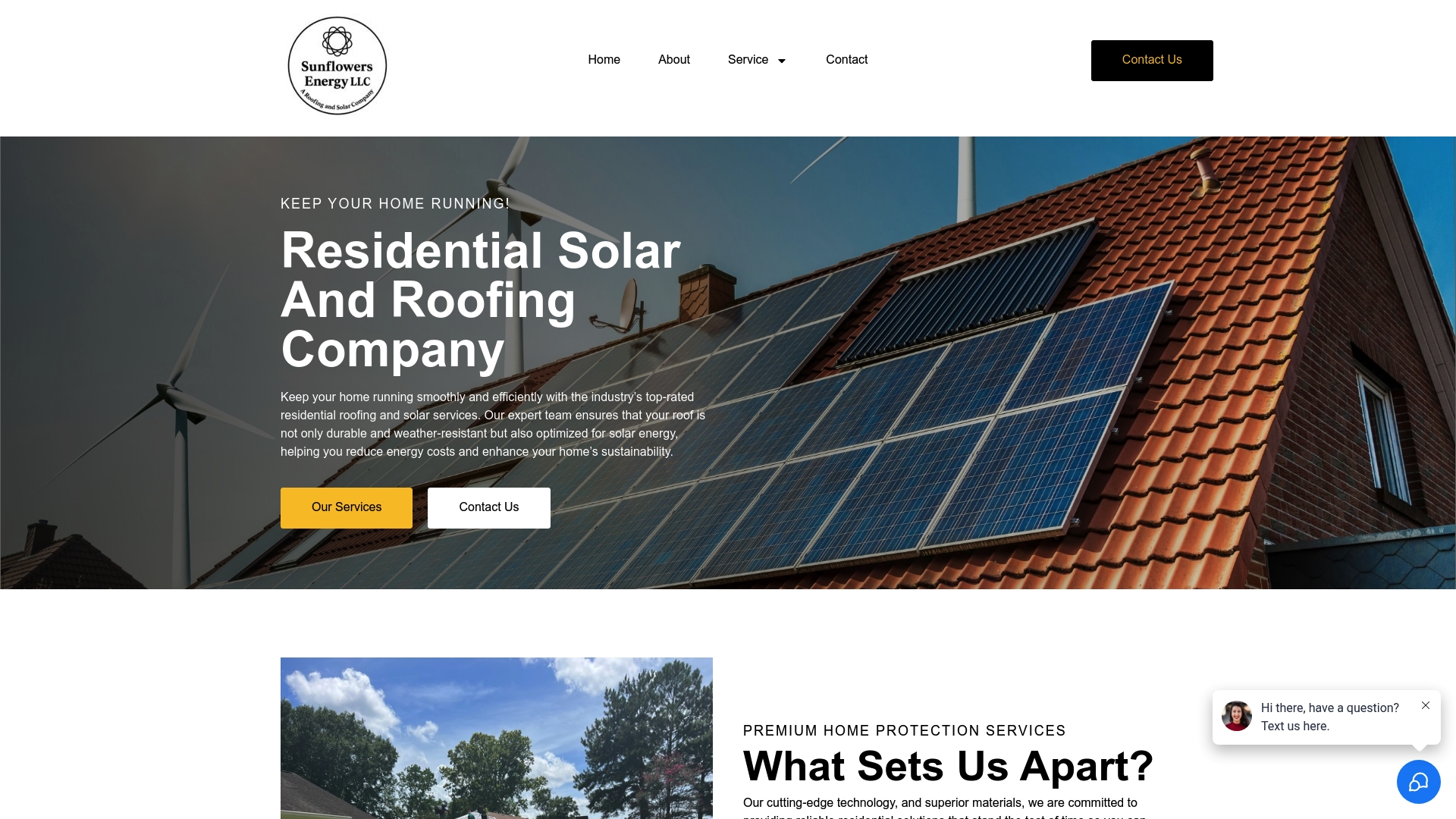
Our team helps you navigate types of solar systems and their advantages to find the perfect match for your energy needs and budget. We combine this terminology knowledge with practical guidance through our solar energy efficiency guide, ensuring you understand exactly how your system will perform. From initial consultation through final installation, our professionals handle every detail outlined in our solar installation steps home efficiency process, delivering systems that maximize your long-term savings and energy independence.
Frequently asked questions
What is the difference between photovoltaic cells and solar panels?
Photovoltaic cells are individual semiconductor units that convert sunlight directly into electricity through the photovoltaic effect. Solar panels are assemblies containing multiple PV cells (typically 60 or 72 cells) connected together and encased in protective materials to generate usable power levels for homes.
How does solar panel efficiency affect my electricity bills?
Higher efficiency panels produce more electricity from the same amount of sunlight and roof space, which means faster bill reductions and greater savings over time. A 25% efficient panel generates about 25% more power than a 20% efficient panel of the same size, directly translating to lower utility costs.
What maintenance do solar panels require to maintain efficiency?
Regular cleaning removes dirt, pollen, and debris that block sunlight and reduce output by 5-15% when left unchecked. Quarterly visual inspections and annual professional assessments catch potential problems early, while seasonal debris removal maintains optimal performance throughout the year.
What does net metering mean and how does it benefit me?
Net metering is a billing arrangement where your utility credits you for excess solar electricity your system sends back to the grid, offsetting power you draw when panels are not producing. These credits reduce your electricity bills by ensuring you receive full value for every kilowatt-hour your system generates, even when production exceeds immediate consumption.
Recommended
- Solar Energy Efficiency Guide for Maximized Home Savings – Sunflowers Energy LLC A Roofing and Solar Companys
- Solar Power for Beginners: Savings and Sustainability – Sunflowers Energy LLC A Roofing and Solar Companys
- How Solar Panels Work – Key Steps for US Homes – Sunflowers Energy LLC A Roofing and Solar Companys
- Master the Solar Energy Savings Workflow for Your Home – Sunflowers Energy LLC A Roofing and Solar Companys