Every American homeowner hoping to lower monthly bills while making a positive environmental impact faces the same challenge—understanding how solar power works and which solutions make sense for their home. With solar energy recognized as a key force for sustainable living worldwide, it is more accessible than ever to transform abundant sunlight into reliable, clean electricity. This guide highlights beginner-friendly solar power technologies and system types to help you confidently start your journey toward energy independence and a greener household.
Table of Contents
- What Is Solar Power And How It Works
- Types Of Solar Systems For Homes
- Essential Components Of Solar Installations
- Costs, Incentives, And Financial Benefits
- Common Mistakes And What To Avoid
Key Takeaways
| Point | Details |
|---|---|
| Understanding Solar Power | Solar power converts sunlight into electricity using technologies like Photovoltaic panels and Concentrating Solar-Thermal Power. This renewable energy reduces carbon footprints and can lower energy costs for homeowners. |
| Types of Solar Systems | Homeowners can choose from Grid-Tied, Off-Grid, or Hybrid solar systems, each offering unique benefits based on energy needs and property characteristics. |
| Financial Benefits | Significant tax credits and incentives are available, with potential savings on electricity bills leading to a payback period of 7-10 years for solar systems. |
| Avoiding Common Mistakes | Proper system sizing, quality component selection, and thorough site evaluations are critical to ensure optimal performance and avoid costly pitfalls in solar installations. |
What Is Solar Power and How It Works
Solar power represents a groundbreaking renewable energy technology that transforms sunlight directly into electrical energy. By harnessing the sun’s abundant radiation, homeowners can generate clean electricity while reducing their carbon footprint and energy expenses. Solar energy technologies are critical for sustainable development and global environmental protection.
At its core, solar power relies on two primary technological approaches: photovoltaic (PV) panels and concentrating solar-thermal power (CSP). Photovoltaic panels work by using specialized semiconductor materials that generate electric charges when exposed to sunlight. When sunlight strikes these panels, electrons are excited and begin moving, creating an electrical current that can power homes, businesses, and various electrical systems.
The mechanics of solar power generation involve several fascinating steps:
- Photon Absorption: Solar panels capture sunlight using photovoltaic cells
- Electron Excitation: Semiconductor materials convert light into electrical charges
- Current Generation: Excited electrons create a flow of electricity
- Energy Conversion: Inverters transform direct current (DC) into usable alternating current (AC)
Photovoltaic technologies continue evolving, becoming more efficient and accessible for residential and commercial applications. Modern solar panels can convert approximately 15-22% of captured sunlight into electricity, with some advanced models reaching even higher efficiency rates.
Pro tip: Consider scheduling a professional solar assessment to determine your home’s specific solar potential and optimal panel placement.
Types of Solar Systems for Homes
Solar energy systems for residential use come in three primary configurations, each offering unique advantages for homeowners seeking sustainable power solutions. Home solar power systems represent diverse technological approaches tailored to different energy needs and property characteristics.
The three main types of residential solar systems include:
- Grid-Tied Systems: Directly connected to the utility grid
- Most cost-effective option
- Allows electricity selling back to utility
- No battery storage required
- Off-Grid Systems: Completely independent from utility infrastructure
- Ideal for remote locations
- Requires comprehensive battery storage
- Total energy self-sufficiency
- Hybrid Systems: Combine grid connection with battery backup
- Provides flexibility and reliability
- Enables power during grid outages
- Maximizes energy independence
Solar home systems offer significant potential for improving residential energy access and reducing carbon footprints. Grid-tied systems remain the most popular choice, allowing homeowners to benefit from net metering policies where excess electricity can be credited back to their utility account.
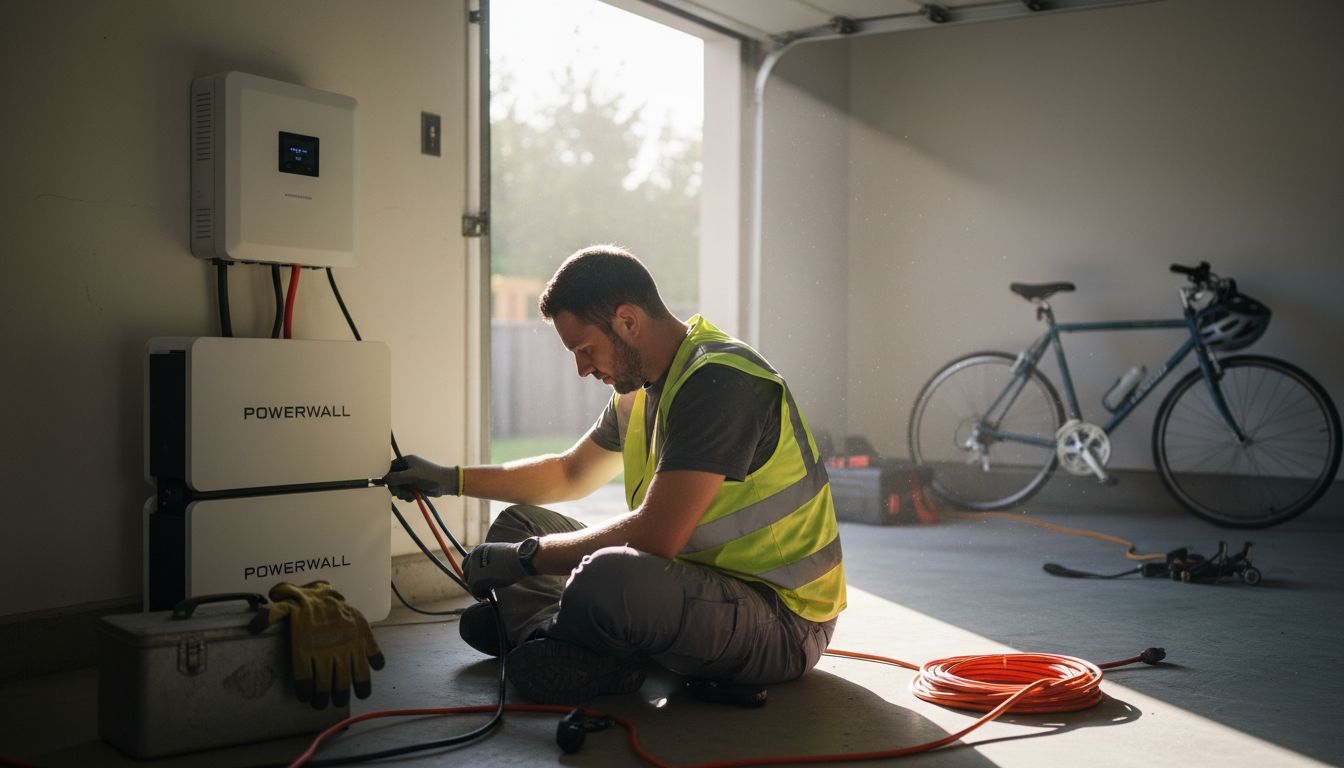
Off-grid systems require more sophisticated planning, typically involving larger battery banks and more extensive solar panel arrays to ensure consistent power generation. These systems are particularly valuable in rural areas or locations with unreliable electrical infrastructure, providing complete energy independence.
Here’s a comparison of the main types of residential solar systems, highlighting unique strengths and best use cases:
| System Type | Strengths | Best For | Power Availability |
|---|---|---|---|
| Grid-Tied | Cost-effective, utility backup | Urban homeowners | Continuous, utility-connected |
| Off-Grid | Total independence, remote use | Rural/isolated properties | Limited to storage and generation |
| Hybrid | Flexible backup, outage support | Areas with frequent outages | Stable, both grid and batteries |
Pro tip: Consult with a solar professional to assess your specific energy requirements and determine the most suitable solar system configuration for your home.
Essential Components of Solar Installations
Solar installations are complex systems composed of multiple critical components that work together to transform sunlight into usable electricity for homes and businesses. Solar photovoltaic systems require precise engineering and carefully selected parts to ensure optimal performance and reliability.
The primary components of a solar installation include:
- Photovoltaic (PV) Modules: Direct sunlight conversion
- Capture solar radiation
- Generate direct current (DC) electricity
- Determine overall system output
- Inverters: Power conversion technology
- Transform DC electricity to AC
- Enable home appliance compatibility
- Optimize energy efficiency
- Batteries: Energy storage solutions
- Store excess generated electricity
- Provide power during low sunlight periods
- Enhance system independence
- Charge Controllers: Battery management systems
- Regulate electricity flow
- Prevent battery overcharging
- Protect battery longevity
- Mounting Structures: Panel support infrastructure
- Ensure optimal panel positioning
- Withstand environmental conditions
- Maximize solar energy capture
Photovoltaic installation elements represent sophisticated technological ecosystems that require careful selection and professional installation. Each component plays a crucial role in system efficiency, with compatibility and proper sizing being paramount to achieving maximum energy generation and reliability.
The electrical infrastructure of solar systems also includes critical safety components like disconnect switches, grounding equipment, and protective fuses. These elements ensure system stability, prevent electrical hazards, and maintain long-term operational integrity.
Pro tip: Schedule an annual professional inspection to verify the optimal performance and safety of your solar installation components.
Costs, Incentives, and Financial Benefits
The financial landscape of solar power has transformed dramatically, making residential solar installations increasingly attractive for homeowners seeking both environmental sustainability and economic advantages. Government solar incentives have played a crucial role in reducing initial investment barriers and accelerating solar adoption across the United States.
Key financial considerations for solar investments include:
- Initial Installation Costs:
- Average residential system: $15,000-$25,000
- Varies by system size and complexity
- Includes panels, inverters, mounting equipment
- Federal Tax Credits:
- 30% of total installation costs
- Significant reduction in upfront expenses
- Applicable through 2032
- State-Level Incentives:
- Additional rebates and tax deductions
- Performance-based rewards
- Net metering programs
- Long-Term Savings:
- Reduced monthly electricity bills
- Potential increase in property value
- Protection against rising energy costs
Solar power economics have improved substantially, with declining technology costs and robust financial incentives creating compelling investment opportunities. Homeowners can typically expect to recoup their initial investment within 7-10 years through energy savings and available tax credits.
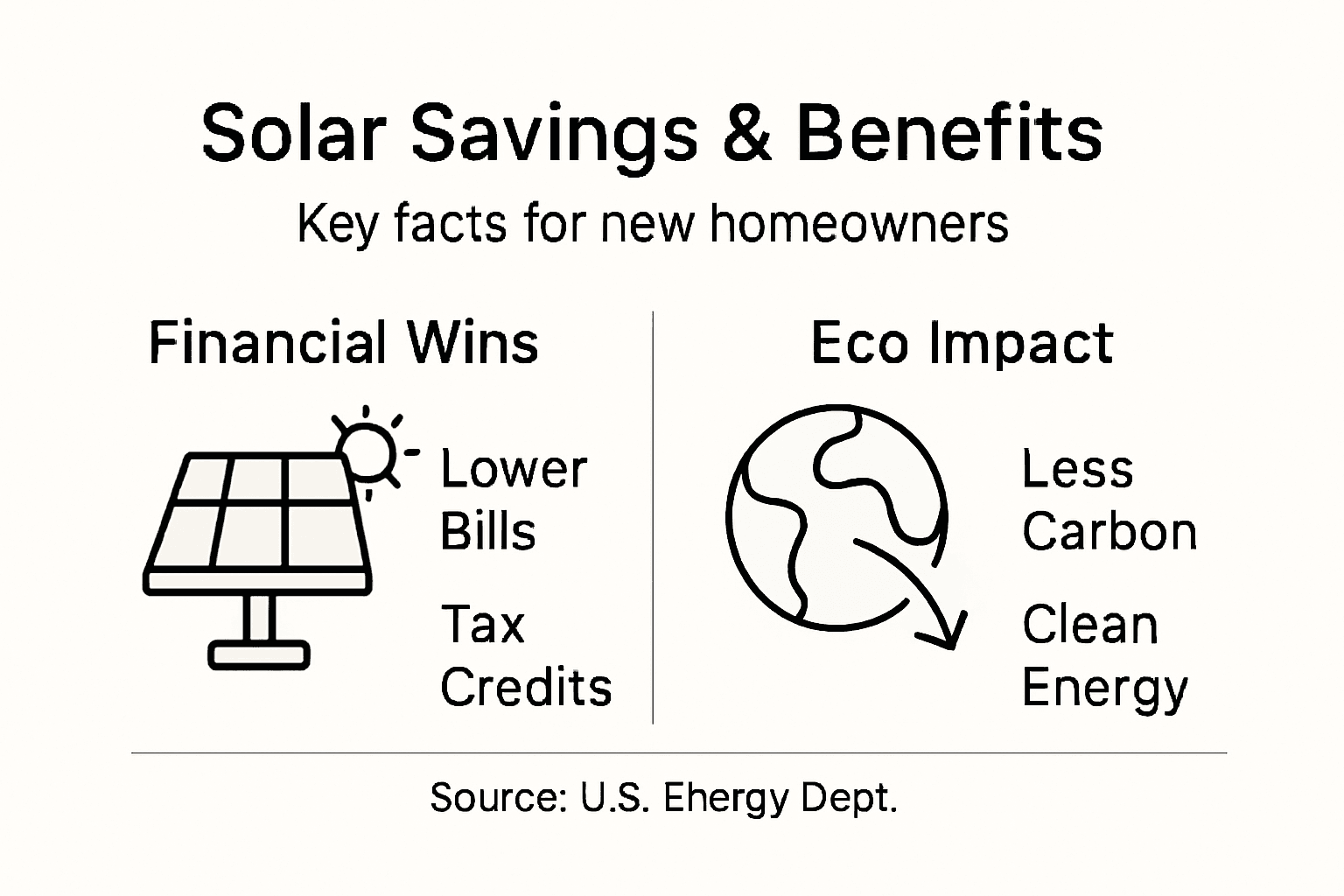
Net metering programs offer additional financial benefits, allowing homeowners to sell excess electricity back to the utility grid. This approach can further offset installation costs and provide ongoing economic advantages, transforming solar from an expense to a potential revenue stream.
The table below summarizes key financial benefits and incentives for residential solar installation:
| Financial Factor | Impact on Homeowners | Duration/Availability |
|---|---|---|
| Federal Tax Credit | Reduces upfront costs by 30% | Through 2032 |
| State Incentives | Additional savings, rebates | Varies by location |
| Net Metering | Offsets bills, credits excess power | Ongoing in many states |
| Long-Term Savings | Boosts property value, cuts bills | Recoup investment in 7-10 years |
Pro tip: Consult with a local tax professional to maximize available solar energy tax credits and incentives specific to your state and municipality.
Common Mistakes and What to Avoid
Navigating the complex world of solar installations requires careful planning and awareness of potential pitfalls that can compromise system performance and financial returns. Photovoltaic system mistakes can significantly impact the long-term effectiveness and efficiency of your solar investment.
Key mistakes homeowners often encounter include:
- Improper System Sizing:
- Underestimating or overestimating energy needs
- Failing to account for future consumption changes
- Neglecting seasonal energy variations
- Poor Component Selection:
- Choosing low-quality solar panels
- Ignoring manufacturer warranties
- Selecting mismatched system components
- Installation Errors:
- Incorrect roof orientation
- Inadequate shading analysis
- Improper mounting techniques
- Financial Miscalculations:
- Overlooking maintenance costs
- Failing to explore full range of incentives
- Not considering long-term savings potential
Site evaluation represents a critical step that many homeowners overlook. Factors like roof condition, sun exposure, local climate, and potential future obstacles can dramatically influence solar system performance. Professional assessments help identify potential challenges before installation, preventing costly mistakes and ensuring optimal system design.
Technical considerations extend beyond initial installation. Ongoing maintenance, regular performance monitoring, and understanding system limitations are crucial for maximizing solar investment. Homeowners should prioritize professional consultations and comprehensive system designs that account for their specific energy needs and property characteristics.
Pro tip: Request detailed site assessments from multiple solar professionals to gain comprehensive insights and avoid potential installation pitfalls.
Discover How Solar Power Can Transform Your Home and Finances Today
The article highlights common challenges like understanding different solar system types and navigating costs and incentives that can overwhelm homeowners aspiring to embrace clean energy. If you want to avoid mistakes such as improper system sizing or poor component selection while maximizing your savings and sustainability goals Sunflowers Energy offers expert guidance tailored to your unique needs. Our premium residential solar solutions use cutting-edge photovoltaic technology combined with reliable installation practices that ensure you get the most from your investment and reduce energy bills effectively.
Take the first step toward energy independence and eco-friendly living with a free onsite inspection and personalized quote from our trusted team. Explore how our services including advanced solar panel installations and durable roofing repairs protect your home and boost its value. Learn more at Sunflowers Energy or start your journey now by visiting our residential solar systems page for details. Don’t wait to unlock the long-term financial benefits and environmental impact of solar power with guidance you can trust.
Frequently Asked Questions
What is solar power and how does it work?
Solar power is a renewable energy technology that converts sunlight directly into electricity using photovoltaic (PV) panels. When sunlight strikes these panels, electrons are excited in semiconductor materials, generating an electrical current that can power homes and businesses.
What are the different types of solar systems available for homes?
The main types of residential solar systems are grid-tied systems, which connect to the utility grid; off-grid systems, which operate independently with battery storage; and hybrid systems, which combine grid connection with battery backup for flexibility and reliability.
What are the essential components of a solar installation?
Key components of a solar installation include photovoltaic (PV) modules for sunlight conversion, inverters for transforming direct current (DC) into alternating current (AC), batteries for energy storage, charge controllers for battery management, and mounting structures to support the solar panels.
How can homeowners benefit financially from installing solar power?
Homeowners can benefit from solar power through initial tax credits, state incentives, long-term savings on electricity bills, and potential increases in property value. Many can expect to recoup their investment within 7-10 years through energy savings and available incentives.
Recommended
- Solar Energy Efficiency Guide for Maximized Home Savings – Sunflowers Energy LLC A Roofing and Solar Companys
- Commercial Solar Basics: Powering Business Sustainability – Sunflowers Energy LLC A Roofing and Solar Companys
- Is Solar Worth It? A Comprehensive Guide to Home Solar Panel Costs – Sunflowers Energy LLC A Roofing and Solar Companys
- What Is Solar Energy and Why It Matters – Sunflowers Energy LLC A Roofing and Solar Companys