Improve building energy savings: roofing and solar strategies
TL;DR:
- Combining cool roofs, insulation, and solar systems maximizes energy savings and cost-effectiveness.
- Proper assessment and strategic planning are essential for optimizing building upgrades and incentives.
- Bundled improvements deliver higher long-term savings and property value increases compared to isolated upgrades.
Small upgrades like cool roofs and rooftop solar can cut energy costs by over 30% annually, yet most buildings leave that money on the table by treating these solutions separately. The real opportunity lies in combining them. High-performing homes with upgraded roofs and solar achieve positive cash flow from month one, according to the U.S. Department of Energy. This guide walks you through assessing your current energy performance, choosing the right roofing upgrades, installing and optimizing solar PV, and maintaining both systems for lasting results. Follow these steps and you will protect your property while dramatically reducing what you spend on energy every month.
Table of Contents
- Assess your building’s current energy performance
- Upgrade your roofing for superior energy efficiency
- Install and optimize rooftop solar PV systems
- Combine and maintain roof and solar solutions for lasting savings
- Why real savings often depend on strategic bundle upgrades
- Take the next step to energy savings with Sunflowers Energy
- Frequently asked questions
Key Takeaways
| Point | Details |
|---|---|
| Audit first for best ROI | A thorough energy performance audit identifies the biggest opportunities for improvement. |
| Roofing upgrades yield quick wins | Switching to cool roofs and insulation can cut cooling and heating costs significantly. |
| Solar + roofing synergy multiplies savings | Combining rooftop PV with energy-efficient roofing maximizes energy savings and comfort. |
| Smart maintenance protects gains | Regular upkeep and monitoring ensure your energy savings last year after year. |
| Bundling boosts incentives | Bundled upgrades can unlock certifications, rebates, and faster payback periods. |
Assess your building’s current energy performance
Now that you understand the potential, let’s start by evaluating your current situation so upgrades target the biggest opportunities.
Before spending a dollar on new materials, you need a clear picture of where your building loses energy. A professional energy audit is the most reliable starting point. An auditor uses blower door tests, thermal imaging cameras, and utility bill analysis to map exactly where conditioned air escapes and where heat enters. Many utility companies offer subsidized audits, so check with yours before hiring independently.
If a professional audit is not immediately available, you can start with a self-assessment. Walk your building and note these common problem areas:
- Roof and attic: Poor insulation or ventilation is often the single largest source of heat gain in summer and heat loss in winter.
- Windows and doors: Gaps, old seals, and single-pane glass allow significant air leakage.
- HVAC system: Aging equipment running at reduced efficiency inflates bills without delivering comfort.
- Lighting: Older fluorescent or incandescent fixtures consume two to four times more electricity than LED alternatives.
- Plumbing and water heating: Uninsulated pipes and older water heaters quietly drain energy budgets.
Once you identify the weak points, prioritize by impact. Roof and insulation upgrades consistently top the list. The table below shows typical energy losses by building component to help you focus your investment.
| Building component | Typical energy loss share |
|---|---|
| Roof and attic | 25-35% |
| Windows and doors | 25-30% |
| Walls and floors | 15-20% |
| HVAC inefficiency | 10-20% |
| Lighting and appliances | 5-15% |
Our energy efficiency guide outlines how to interpret audit results and prioritize next steps. For a broader framework, the energy savings optimization resource can help you build a full plan. According to DOE energy-saving benchmarks, net-zero homes offset 5-10% added construction costs by generating positive monthly cash flow through energy savings.
Pro Tip: Bundle your roofing, insulation, and solar upgrades into a single project phase when possible. Many federal and state incentive programs reward bundled improvements with higher rebates and tax credits, so you maximize eligibility and reduce your total out-of-pocket cost.
Upgrade your roofing for superior energy efficiency
After you pinpoint where your building loses the most energy, upgrading your roof is the first big step toward systemic savings.
Your roof is your building’s primary thermal barrier. Choosing the right roofing system can reduce cooling loads, cut heating costs, and prepare your structure for solar panels. Three categories of energy-efficient roofing stand out: cool roofs, insulated roofing assemblies, and reflective metal or membrane systems.
Signs you need a roofing upgrade:
- Shingles that are cracked, curling, or missing
- Visible daylight through attic boards
- Energy bills that spike sharply in summer or winter
- Interior rooms that feel unusually hot or cold despite HVAC running
- Moisture stains or mold in the attic
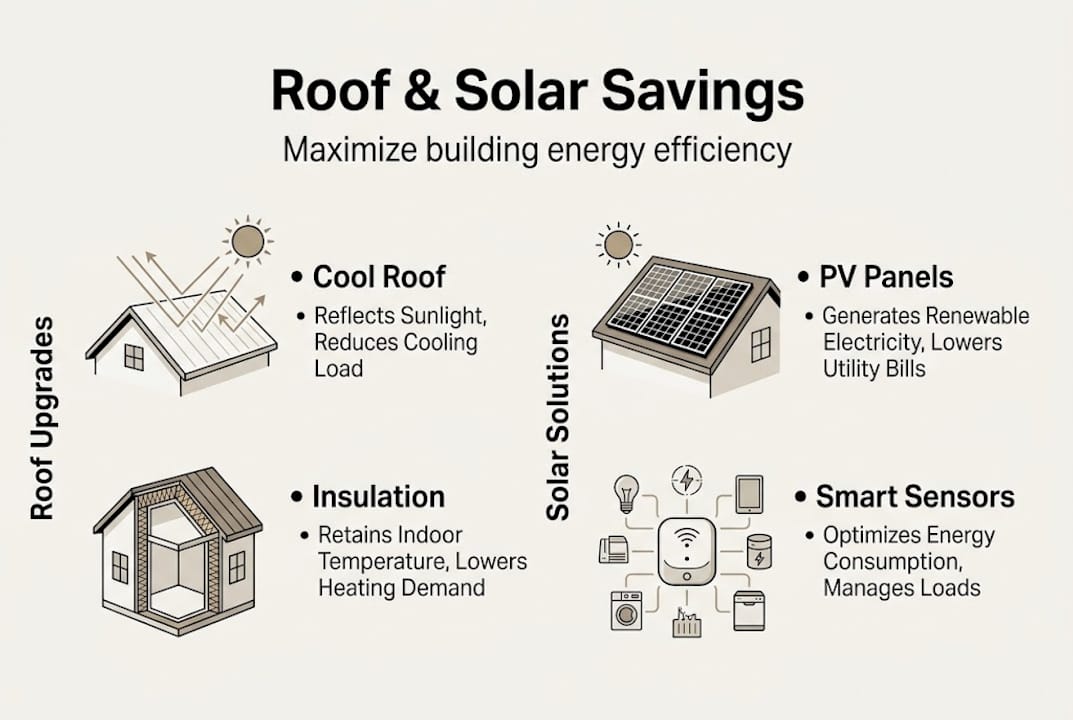
Cool roofs use highly reflective materials to bounce solar radiation away from the building rather than absorbing it. According to the EPA cool roof benefits data, cool roofs reduce peak cooling demand by 11-27% and lower indoor temperatures by up to 3.3°C. That is a meaningful reduction in air conditioning runtime and cost.
“A well-installed cool roof can lower a building’s surface temperature by up to 50°F compared to a conventional dark roof, translating directly into lower cooling bills and a more comfortable interior.”
Insulated roofing assemblies add continuous rigid insulation beneath or above the roof deck, sealing thermal bridges that standard batt insulation misses. Code-compliant reroofing insulation saves up to 11% of whole-building energy annually, making it one of the highest-return single upgrades available.
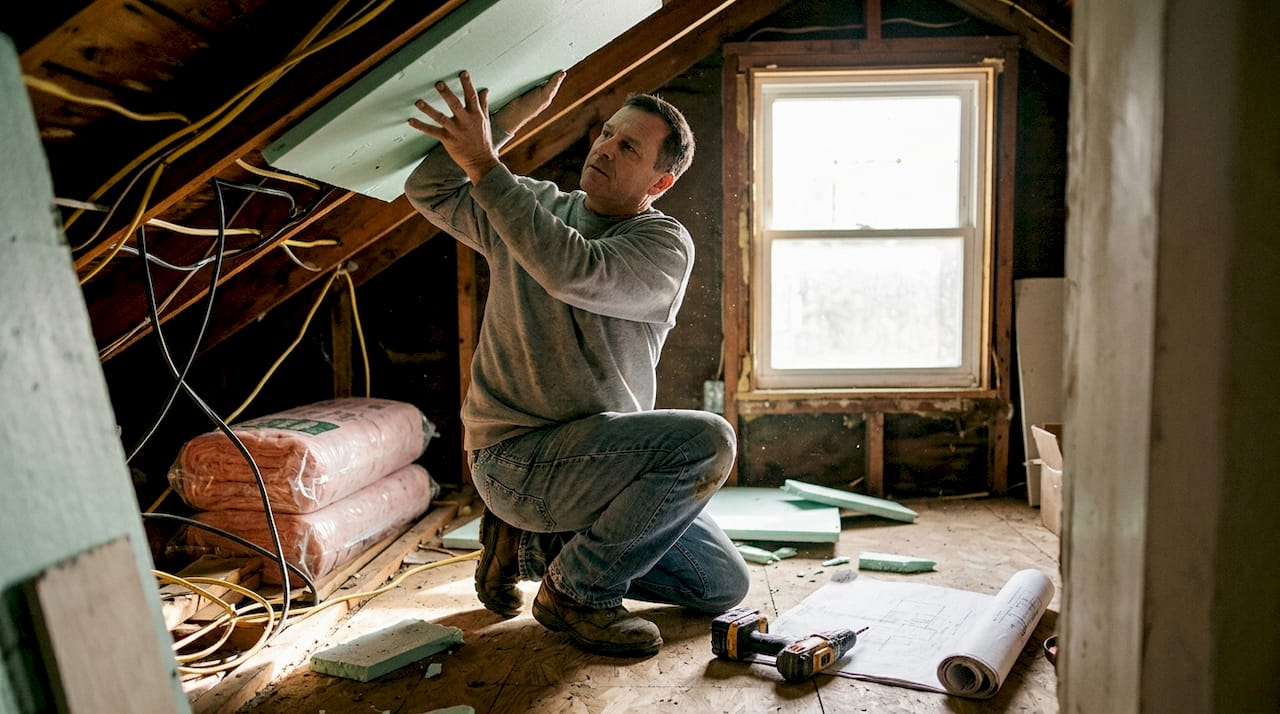
| Roofing solution | Expected annual savings | Relative cost |
|---|---|---|
| Cool roof coating | 5-15% cooling costs | Low |
| Reflective membrane | 10-20% cooling costs | Medium |
| Insulated assembly | Up to 11% whole-building | Medium-High |
| Metal roofing with coating | 10-25% cooling costs | High |
For a deeper look at how roofing choices affect your energy bill, our guide on roofing and energy savings covers material comparisons in detail. You can also explore energy-efficient roofing options and understand the roofing efficiency role in overall building performance.
Pro Tip: In colder climates, a cool roof can create a slight heating penalty during winter because it reflects solar heat you would otherwise want. Pairing your cool roof with R-38 or higher attic insulation neutralizes this effect and keeps the net savings strongly positive year-round.
Install and optimize rooftop solar PV systems
Once your roof is ready, adding solar PV can further multiply your energy savings and lower costs.
Solar photovoltaic (PV) panels convert sunlight directly into electricity, offsetting what you buy from the grid. The key is matching system size to your roof’s capacity and your building’s actual consumption. Here is how to approach it step by step:
- Review your utility bills for the past 12 months to calculate your average monthly kilowatt-hour (kWh) usage.
- Assess your roof’s solar potential by checking orientation, pitch, and shading from trees or neighboring structures.
- Verify structural load capacity with a licensed contractor before installation, especially on older buildings.
- Size your system based on available roof area and your consumption target, accounting for local solar irradiance data.
- Select panels and inverters suited to your roof type, budget, and any shading conditions.
- Apply for incentives including the federal Investment Tax Credit (ITC), state rebates, and net metering agreements with your utility.
- Schedule installation and inspection with a certified installer who follows local building codes and IECC requirements.
The scale of opportunity is significant. 40% rooftop PV coverage on commercial buildings saves 33% of purchased electricity, equivalent to 1,039 TBtu nationally according to NREL research. For residential properties, even modest coverage produces measurable savings from the first billing cycle.
Combining solar PV with a cool roof creates a powerful synergy. Cool roofs increase bifacial PV output by 20-29% by reflecting additional light onto the underside of bifacial panels. This means your solar investment works harder simply because of the surface beneath it.
Incentives and code requirements to know:
- Federal ITC: 30% tax credit on installed solar system cost
- ENERGY STAR certification for panels and inverters
- IECC PV-ready conduit requirements in new construction
- Local net metering policies that credit excess generation
- Utility interconnection agreements and inspection requirements
For guidance on selecting the right system, our resource on choosing solar roofing is a practical starting point. The reducing energy costs guide and our solar savings workflow walk you through the full process from planning to payback.
Pro Tip: Always audit for edge cases before installation. Partial shading from a single tree branch can reduce an entire string of panels by 20-30%. A shading analysis tool or a site visit at solar noon gives you the clearest picture of actual production potential.
Combine and maintain roof and solar solutions for lasting savings
To ensure your investments keep paying off, maintenance and timely verification are just as critical as the initial upgrades.
Installing upgrades is only the beginning. The buildings that realize the greatest long-term savings are the ones that treat maintenance as a regular practice rather than an afterthought. Combined roof and PV systems can net 55-80% savings by building type when insulation and monitoring are included, according to JRC empirical benchmarks.
Ongoing maintenance best practices:
- Clean solar panels at least twice per year, or more frequently in dusty or pollen-heavy environments
- Inspect roof flashing, seals, and penetrations annually to prevent moisture intrusion
- Check attic insulation levels and look for signs of settling or moisture damage
- Monitor your energy monitoring system or smart meter monthly to catch performance drops early
- Trim trees and vegetation that may have grown to shade panels since installation
- Schedule a professional roof inspection after major storms to identify damage before it worsens
Verification is equally important. Compare your monthly utility bills to your pre-upgrade baseline and track the trend over time. Smart energy sensors installed at the panel or circuit level give you real-time data on which systems are performing and which need attention. This data also strengthens your case when filing for ongoing incentives or warranty claims.
| Upgrade combination | Expected savings range | Property value uplift |
|---|---|---|
| Cool roof only | 5-20% energy costs | Moderate |
| Roof insulation only | Up to 11% whole-building | Moderate |
| Solar PV only | 20-40% electricity costs | High |
| Roof + insulation + PV | 55-80% total energy costs | Very High |
Our guide on boost efficiency with new roofing explains why timing your roof replacement with solar installation is the smartest financial move. For ongoing care, roofing maintenance and savings covers what to inspect and when.
Pro Tip: Smart sensors and bundled upgrades consistently deliver payback periods under 10 years. If you are planning a roof replacement anyway, that is the ideal moment to add insulation and PV-ready conduit, since the incremental cost is a fraction of doing it as a separate project later.
Why real savings often depend on strategic bundle upgrades
With the technical steps covered, let’s step back for a broader and often overlooked perspective on maximizing your investment.
Here is something most upgrade guides will not tell you directly: a single improvement rarely delivers the savings it promises in isolation. A new cool roof on a poorly insulated attic still leaks conditioned air. Solar panels on a building with an inefficient HVAC system just offset waste instead of eliminating it. The numbers tell the story clearly. Homeowners who bundle roof, insulation at R-38 or higher, solar PV, and smart sensors realize 40%+ savings with under 10-year payback. Piecemeal upgrades rarely come close to that threshold.
The reason most homeowners and businesses undershoot is planning order. They react to a failing roof or a high utility bill and make one change at a time. Each upgrade is evaluated in isolation, incentives are missed because thresholds are not met, and the synergistic effect of combined systems never materializes.
The smarter approach is to audit first, then plan strategically across all systems before committing to any single upgrade. Think about future code requirements too. Installing PV-ready conduit during a reroofing project costs very little now but saves significant labor and disruption when you add panels later. Choosing energy-efficient roofing results that qualify for ENERGY STAR certification today positions you for better incentives tomorrow.
The buildings that achieve the most dramatic savings are not the ones with the most expensive individual components. They are the ones where every system was chosen to work with the others.
Take the next step to energy savings with Sunflowers Energy
When you’re ready to maximize your property’s energy efficiency and savings, here’s how to get expert support and guidance.
At Sunflowers Energy, we specialize in exactly the kind of bundled, strategic upgrades that deliver real results. Whether you need a premium energy-saving roofing solution, a full residential or commercial solar installation, or both combined into a single optimized project, our team is ready to help you plan and execute it right.
We offer free onsite inspections and personalized quotes so you know exactly what to expect before any work begins. Our certified installers follow ENERGY STAR and IECC standards, and we guide you through every available incentive to reduce your upfront cost. Explore our solar efficiency solutions and review the solar installation steps to see how straightforward the process can be. Contact us today and let’s build a plan that protects your property and powers it more affordably.
Frequently asked questions
What are the fastest ways to reduce energy bills in a home or business?
Bundle roof, insulation, and solar upgrades together. This approach can deliver 40%+ energy savings within 10 years, far outperforming any single upgrade on its own.
Do cool roofs work in cold climates, or will they increase heating bills?
Cool roofs can create a small heating penalty in cold climates, but pairing them with proper insulation offsets this effect. According to the EPA cool roof data, the overall benefits still outweigh costs for most buildings.
How much electricity can rooftop solar panels offset in a typical commercial building?
With 40% rooftop PV coverage, commercial buildings can offset approximately 33% of their purchased electricity, based on NREL analysis of the U.S. commercial building stock.
What certifications or standards should I look for when upgrading my roof for energy savings?
Look for ENERGY STAR certification and IECC code compliance, both of which are required for DOE Efficient New Homes designation and help maximize your access to rebates and tax credits.
Is roof insulation really worth it for energy savings?
Absolutely. Reroofing insulation saves up to 11% of whole-building energy annually, making it one of the highest-return upgrades you can make relative to its cost.
Recommended
- Role of roofing in sustainability: energy savings in 2026 – Sunflowers Energy LLC A Roofing and Solar Companys
- 10 Proven Ways to Reduce Energy Costs with Solar & Roofing – Sunflowers Energy LLC A Roofing and Solar Companys
- Role of roofing in energy efficiency: reduce costs – Sunflowers Energy LLC A Roofing and Solar Companys
- Energy savings optimization: complete guide saves 30% yearly – Sunflowers Energy LLC A Roofing and Solar Companys
- 7 Key Advantages of Home Solar Systems for UK Homeowners – Skyenergi

2 Responses